
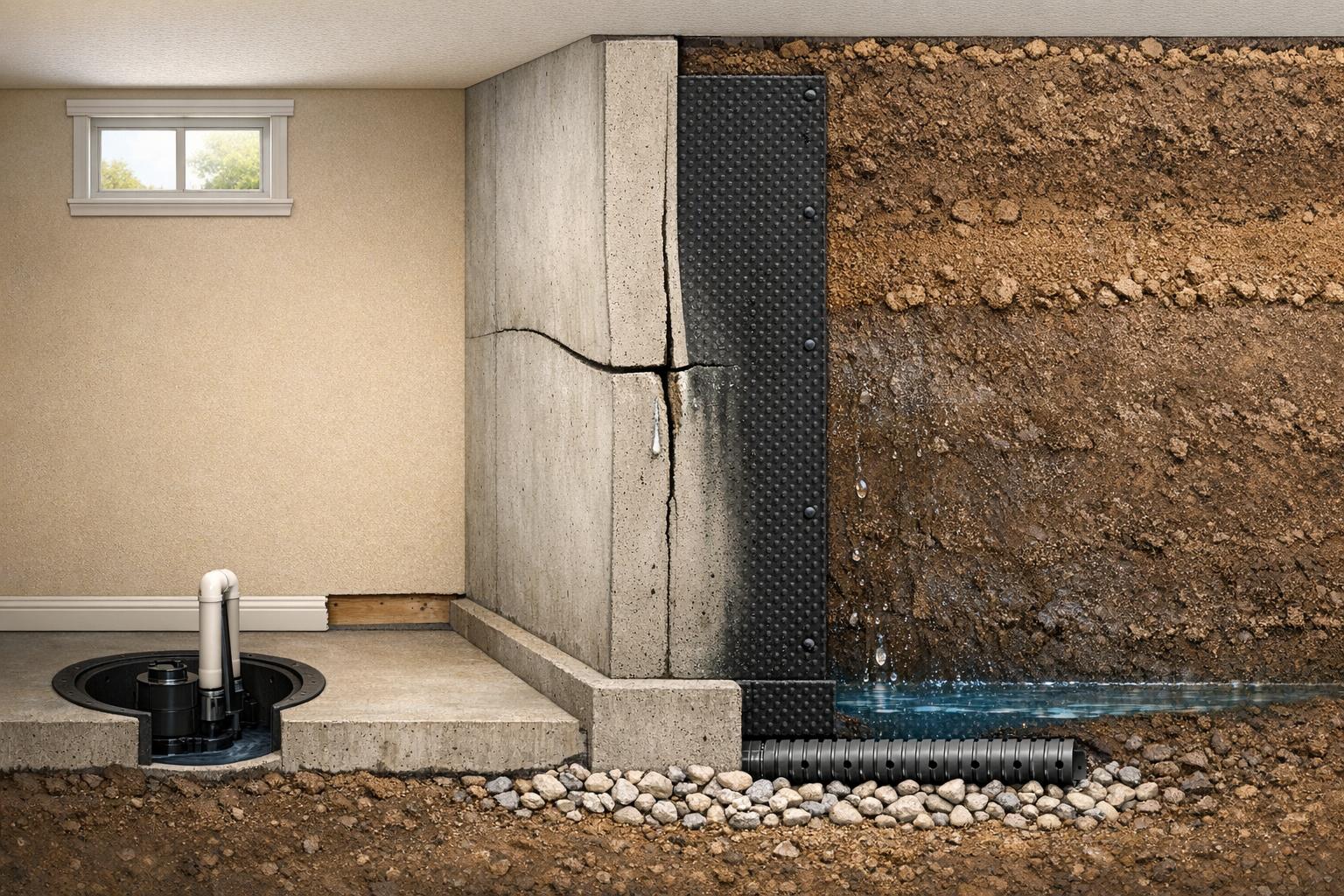
Hydrostatic pressure is one of the biggest threats to basement walls, especially in areas with heavy rainfall, snowmelt, or clay-heavy soils like Southern Ontario and Alberta. This pressure, caused by water-saturated soil pressing against your foundation, can lead to cracks, water seepage, bowing walls, and even structural damage. Repair costs can climb to $15,000 or more, and ignoring the issue can reduce your home’s value by over 10%.
Key Takeaways:
- What it is: Hydrostatic pressure is the force exerted by standing water in saturated soil.
- Why it matters: It can crack concrete, bow walls, and cause leaks.
- Warning signs: Horizontal cracks, bowed walls, water seepage, efflorescence, musty smells, and mould.
- Prevention tips: Proper yard grading, clean gutters, extending downspouts, and regular inspections.
- Solutions: Exterior drainage, interior waterproofing systems, and foundation reinforcements.
If you notice signs like cracks or water leaks, act fast. Early action can save you thousands in repairs and protect your home’s value.
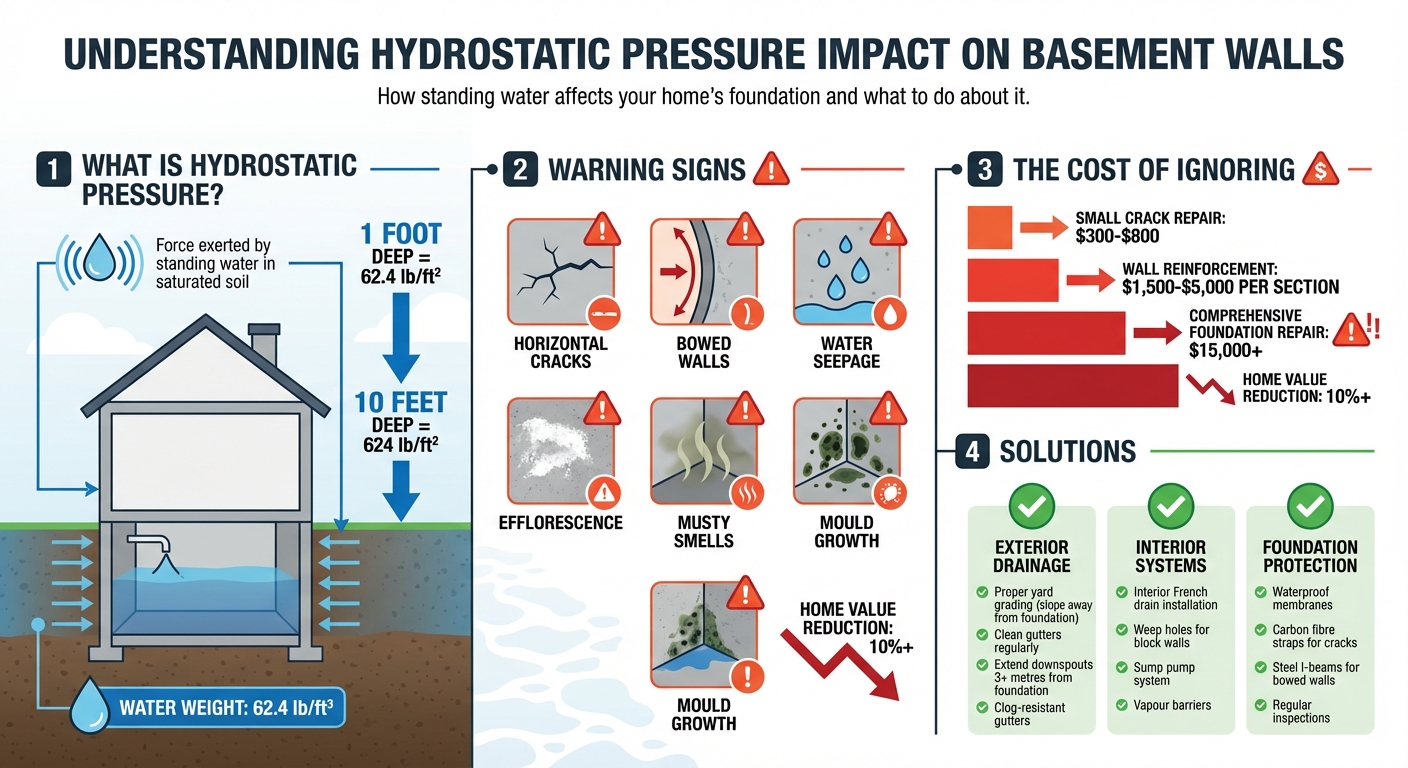
Warning Signs and Solutions for Hydrostatic Pressure in Basements
Combat Hydrostatic Pressure: Your Ultimate Guide to Basement Waterproofing
sbb-itb-5761e20
What Is Hydrostatic Pressure?
Hydrostatic pressure is the force that standing water exerts against surfaces like basement walls and floors. Breaking it down, “hydro” refers to water, and “static” indicates its stationary state.
Gravity pulls water downward through saturated soil. Since water weighs approximately 62.4 lb/ft³, the pressure increases with depth. For example, at 1 foot deep, the pressure is 62.4 lb/ft², but at 10 feet, it rises to 624 lb/ft².
Pascal’s Law explains how this pressure behaves in confined fluids – it spreads evenly in all directions. Hugo D’Esposito from A.M. Shield Waterproofing elaborates:
“Pascal’s Law states that any pressure applied at one point in a confined fluid is transmitted undiminished in all directions. In a basement scenario, pressure from groundwater at one section of the wall is conveyed equally across the entire surface area”.
This uniform pressure becomes even more intense when combined with certain soil conditions.
The “clay bowl” effect is a major contributor. Backfill soil around your foundation can trap water, pressing it against basement walls. In Canada, rapid spring thaws exacerbate this issue. Regions like Southern Ontario and Alberta, known for their clay-heavy soils, are particularly prone to this sustained and intense pressure.
When soil becomes fully saturated, it can generate tens of thousands of pounds of force against your foundation. This level of pressure is strong enough to crack concrete, bow walls, and push water through even the tiniest openings.
How Hydrostatic Pressure Affects Basement Walls
When soil becomes saturated with water, it creates intense lateral pressure on foundation walls. If left unresolved, this pressure can escalate minor issues into serious structural problems. Here’s how hydrostatic pressure typically impacts basement walls.
Basement Wall Cracks
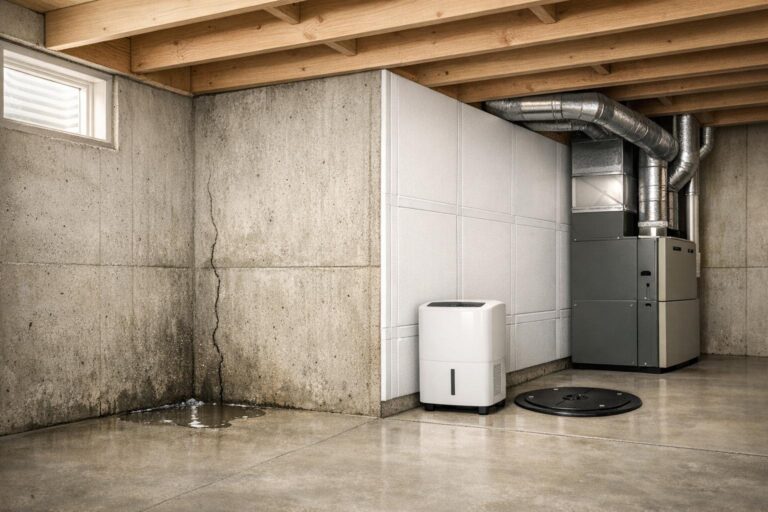
Cracks in basement walls often form due to the movement caused by this pressure. The type of crack can reveal the underlying issue:
- Horizontal cracks: These signify significant pressure against the middle of the wall and are particularly alarming.
- Vertical cracks: These are often linked to settlement problems.
- Diagonal cracks: These indicate substantial pressure or foundation shifts.
Hydrostatic pressure doesn’t just create cracks – it also forces water through the concrete’s pores and along the cove joint where the wall meets the floor. This often leaves behind efflorescence, a white, powdery residue caused by evaporating water depositing minerals on the surface.
Bowing or Leaning Basement Walls
As saturated soil presses against basement walls, it can cause them to bow or buckle inward. Samantha Moore from APS Foundation Repair explains the extent of the force:
“As groundwater builds up, it can exert hundreds of pounds of pressure per square foot against your foundation.”
Signs of bowing or leaning include inward curvature of the walls, drywall detaching from screws, support beams pulling away from the ceiling, or gaps forming where the wall meets the floor. If this pressure continues unchecked, walls may buckle entirely, endangering the structural integrity of your home.
Water Seepage and Leaks
Hydrostatic pressure can force water through even the tiniest gaps in your foundation. Basement Systems describes the process:
“Hydrostatic pressure can easily drive groundwater into the basement through gaps and cracks in the masonry. High water pressure can also cause seepage through solid concrete.”
The wall-floor joint is a common entry point for water, as pressure from below pushes it upward. This upward pressure can dissolve salts in the concrete, making the water alkaline and further weakening the material by creating new pores and cracks. The result? Flooding, persistent dampness, musty odours, mould, peeling paint, and even wood rot in framing materials.
Why Hydrostatic Pressure Worsens Over Time
Hydrostatic pressure doesn’t just stay the same – it grows worse if left unaddressed. When water finds its way into your basement through cracks or porous concrete, it creates a lasting pathway. As Olshan Foundation explains, these tiny air channels in concrete can evolve into “narrow channels” that expand with each saturation event. If water has entered once, it will keep coming back, and the damage will escalate over time.
Seasonal changes add fuel to the fire. Canadian winters, for example, are particularly harsh on foundations. When moisture freezes, it expands (a process known as frost heave), only to thaw and release large amounts of water. This raises the water table and further weakens the foundation. This annual freeze-thaw cycle acts like a repeated attack on your home’s structural integrity.
The problem is compounded by the “clay bowl effect.” Backfill soil around your home tends to trap water, leading to prolonged saturation. As Olshan Foundation notes, “the longer the soil stays saturated around your home, the worse your basement flooding problem will become”.
Expansive clay soils make matters even worse. These soils swell when wet and shrink when dry, creating constant stress on your foundation walls. Over time, this repetitive expansion and contraction can cause the walls to bow or bulge, reducing their ability to resist lateral forces. This weakens the structure further, increasing the risk of significant movement or even collapse.
As the damage worsens, so do the repair costs. Fixing small cracks might cost between $300 and $800, but delaying repairs can lead to the need for wall reinforcement, which ranges from $1,500 to $5,000 per section. If the problem becomes severe, comprehensive foundation repairs could exceed $15,000. On top of that, unresolved basement water damage can slash your home’s resale value by 10% or more.
Diagnosing Hydrostatic Pressure Problems
Catching hydrostatic pressure issues early can save you from costly structural repairs. Knowing where to look and what to watch for is key. Start by checking areas that are most vulnerable to pressure-related damage.
Begin with a thorough inspection of your foundation walls. Horizontal cracks in the mortar joints are a red flag that external water pressure is pushing against the walls. As David Tan, Owner of Stronghold Foundation Pros, explains:
“Horizontal cracks… suggest that water pressure is pushing against the wall with enough force to make it bend or shift”.
Another clear sign to watch for is bowed walls, which indicate that the foundation is under strain from saturated soil pressing against it.
Keep an eye out for efflorescence, the white, powdery residue that forms on concrete walls. This happens when water seeps through porous concrete, evaporates, and leaves behind mineral salts. Efflorescence is like a warning light – it means moisture is already seeping into your walls, even if there aren’t visible leaks yet.
Pay special attention to the wall-floor joint, also known as the cove. This spot, where the basement floor meets the wall, is a common entry point for water caused by hydrostatic pressure. Chad Vanvari, President and Owner of Flood Services Canada, explains:
“If you notice water leaking into your basement from low on the walls or where the wall meets the floor, you are likely dealing with hydrostatic pressure”.
Other signs include musty odours and mould growth on wood framing or drywall, both of which point to persistent moisture issues.
For a more accurate assessment, try the plastic sheet test. Tape a plastic sheet to the basement floor and leave it for 24–48 hours. If moisture droplets form underneath, it’s a clear sign of hydrostatic pressure through the slab. Alternatively, use a concrete moisture metre – readings above 5% indicate a high likelihood of moisture damage.
Solutions to Reduce Hydrostatic Pressure
Once you’ve pinpointed hydrostatic pressure issues, the next step is tackling them with effective strategies. Success often lies in combining improvements to exterior drainage with interior solutions tailored to your home’s specific needs.
Exterior Drainage Improvements
The first line of defence against hydrostatic pressure begins outside your home. Proper yard grading is essential – your landscape should slope away from the foundation to prevent water from pooling near the walls. If the ground slopes toward the house, water will collect, increasing pressure on your basement walls.
It’s also crucial to manage gutters and downspouts. Clogged gutters or poorly placed downspouts can exacerbate water problems. Use clog-resistant gutters and ensure downspouts discharge water at least 3 metres away from your foundation to avoid issues like winter freeze-ups.
One thing to watch for is improper backfill around your home, which can worsen water collection. While exterior French drains are a common solution, they aren’t foolproof – they can clog over time due to silt or tree roots. These exterior measures work best when paired with interior drainage systems.
Interior Drainage Solutions
Once you’ve improved exterior water diversion, it’s time to address any water that’s already made its way to the foundation. Installing an interior French drain along the joint where the wall meets the floor is an effective strategy. For block walls, adding weep holes allows trapped water to escape. These systems channel water to a sump pit for removal.
According to Basement Systems:
“An integrated interior waterproofing system that relieves pressure is often the best solution.”
Interior systems have the added advantage of being protected from external factors like tree roots or shifting soil, ensuring consistent performance. Pairing this system with a vapour barrier – a waterproof plastic membrane applied to the walls – further enhances protection. This barrier blocks moisture and directs any seepage into the drainage system.
Foundation Wall Waterproofing
After addressing drainage, waterproofing adds another layer of defence against moisture. This step creates a barrier to prevent water from entering your home but works best when combined with pressure relief measures. Simply sealing cracks won’t hold up against the immense force of saturated soil.
On the interior, vapour barriers and waterproof membranes can be applied to the walls. These materials prevent moisture from passing through porous concrete and guide any seepage into the drainage channels. For exterior applications, waterproof membranes are installed during excavation to shield your foundation from soil moisture.
If hydrostatic pressure has already caused structural damage, waterproofing alone won’t solve the problem. Reinforcement may be necessary. Options like carbon fibre straps can stabilise cracked walls, while steel I-beams can realign walls that have started to bow. Combining these solutions with regular maintenance ensures long-term protection.
Prevention Tips for Homeowners
Keeping water away from your foundation is key to avoiding hydrostatic pressure and the damage it can cause. A little maintenance now can save you from expensive repairs later.
Start by checking your yard’s grading, especially after the spring thaw. The soil around your foundation should slope away from your home. Over time, backfilled soil can settle, creating a negative grade that directs water toward your basement walls instead of away from them. If you notice water pooling near the foundation, add fill dirt to restore the slope. Also, clear away debris, snow, and ice to keep drainage paths open.
Your gutters and downspouts play a big role in managing water flow. Clean your gutters at least twice a year – more often if you have trees nearby – to prevent overflow near your foundation. Make sure downspouts extend at least 3 metres from your house and drain onto areas with a proper slope. In Canada’s cold winters, consider using anti-freeze attachments on exterior discharge lines to avoid ice blockages during freeze-thaw cycles.
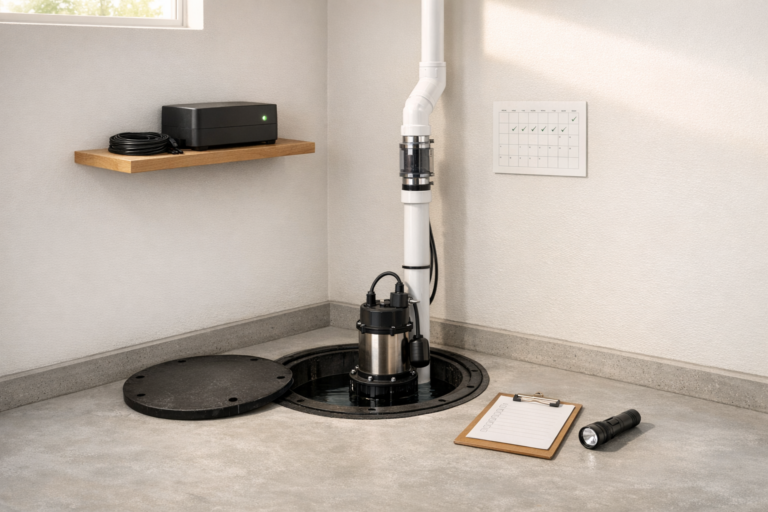
Regular inspections can also help catch moisture problems early. Check window wells and basement walls for debris, white mineral deposits (efflorescence), or other signs of moisture. Test your sump pump every few months by pouring a 20-litre bucket of water into the pit to ensure it activates correctly.
Chad Vanvari, President and Owner of Flood Services Canada, emphasizes the importance of this:
“Hydrostatic pressure can seep water into your basement, and if left unnoticed, standing water can cause damage to your property and lead to the buildup of mould”.
When to Call a Professional
After identifying hydrostatic pressure issues, it’s crucial to recognize when it’s time to bring in the experts.
Some problems demand immediate professional attention. For instance, horizontal cracks in basement walls are a red flag. These cracks signal that water pressure is pushing against the wall, causing it to bend or shift. While vertical cracks might sometimes result from normal settling, horizontal ones indicate far more serious stress.
If your basement walls are bowing, bulging, or leaning, it’s a sign of significant pressure on your foundation that could lead to structural failure. These situations require urgent stabilization from a specialist. Similarly, if your basement floor cracks, heaves, or lifts, it points to upward pressure from beneath, which cannot be resolved without professional expertise.
Another warning sign is water infiltration at the wall-floor joint, often called “cove leakage”. This type of seepage suggests rising groundwater pressure, which can’t be fixed with surface-level solutions. As Basement Systems explains:
“If the water was capable of entering the basement once, there is no reason that it will not enter again and again, or get worse, in the future”.
To determine whether professional help is needed, try simple diagnostic tests. For example, perform the coin test: if a coin fits into a crack, the damage is significant enough to require expert evaluation. Another method is to mark the ends of cracks with a pencil and monitor them over time to see if they widen. Be on the lookout for weep lines – damp streaks or water stains near the base of walls – which indicate water under pressure forcing its way through.
Professional help isn’t just about protecting your foundation; it’s also about addressing ongoing moisture problems. Persistent issues like efflorescence (a white, powdery residue), musty odours, and mould growth suggest continuous water penetration, which can lead to health risks. Specialists can implement comprehensive solutions such as wall anchors, carbon fibre reinforcements, interior drainage systems, and sump pumps. Many foundation repair companies even offer free inspections, giving you a chance to get an accurate diagnosis without any upfront cost.
Conclusion
Hydrostatic pressure is a force that every homeowner with a basement should be aware of. When groundwater saturates the soil surrounding your foundation, it generates immense pressure against walls and floors. This isn’t just a minor issue – it can lead to cracks, bowing walls, persistent leaks, and, in extreme cases, serious structural damage. Understanding this problem is the first step toward taking action.
Moisture problems, if ignored, can quickly worsen. Each time water seeps into your basement, the damage compounds. What starts as a small crack could eventually grow into a major structural concern, requiring costly fixes like wall anchors or carbon fibre reinforcements. These repairs are far more expensive than addressing the issue early on.
The consequences go beyond structural damage. Ignoring hydrostatic pressure can reduce your home’s value and pose risks to your family’s health. Persistent moisture creates the perfect conditions for mould and mildew, which bring musty odours and potential health hazards. Chad Vanvari, President and Owner of Flood Services Canada, highlights the urgency of acting quickly:
“The longer you leave water standing in your basement, the higher the risk will be for irreparable damage, so act quickly”.
Thankfully, there are effective solutions. Options range from improving exterior drainage and grading to installing interior drainage systems with sump pumps. Addressing these issues early is not only simpler but also far less expensive than waiting for walls to bow or floors to shift. Regularly checking for warning signs allows you to tackle problems while they’re still manageable.

 CLOGGED OR BROKEN WEEPING TILE