
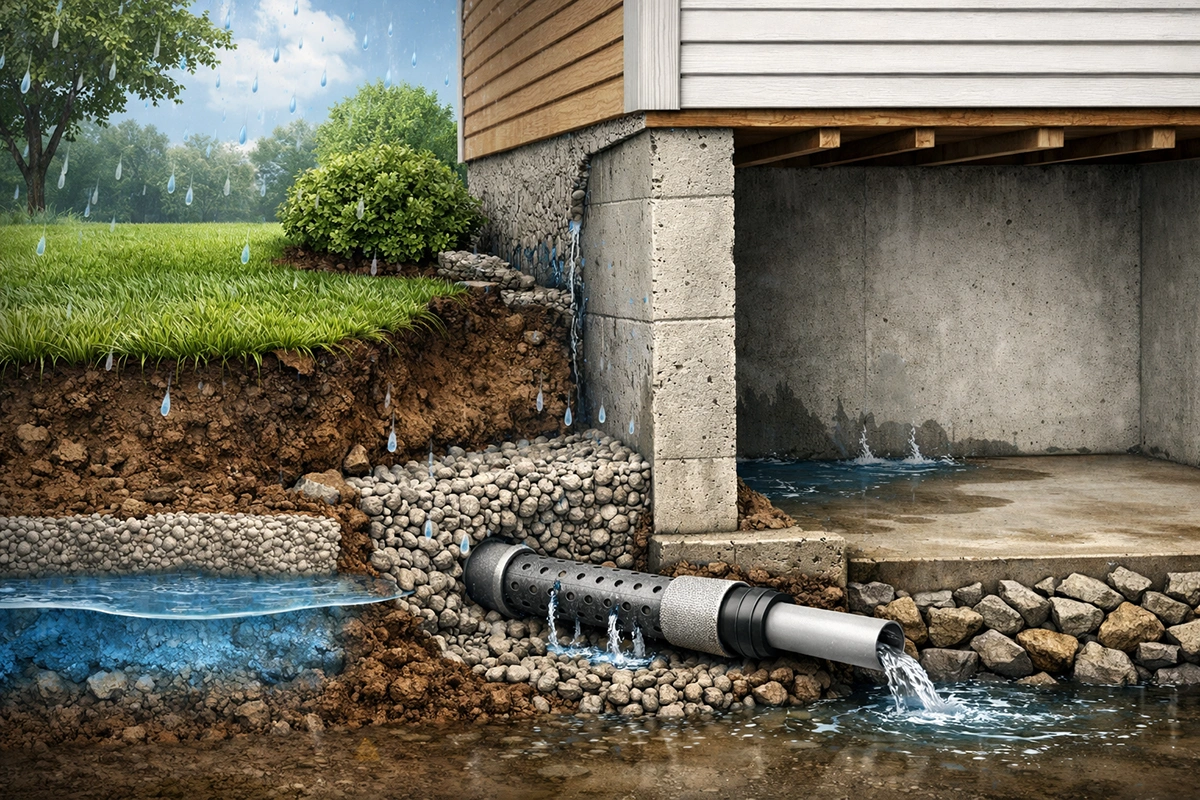
Managing groundwater around a home’s foundation is one of the most important aspects of long-term structural protection. Even a well-built basement can develop leaks, moisture intrusion, or hydrostatic pressure problems if water is allowed to accumulate around the footing. This is where a footing drain becomes essential. Homeowners often ask what is a footing drain, how it works, and if it is still effective compared to modern waterproofing systems. Below is a clear explanation of how these systems function and when they are most beneficial.
What Is a Footing Drain?
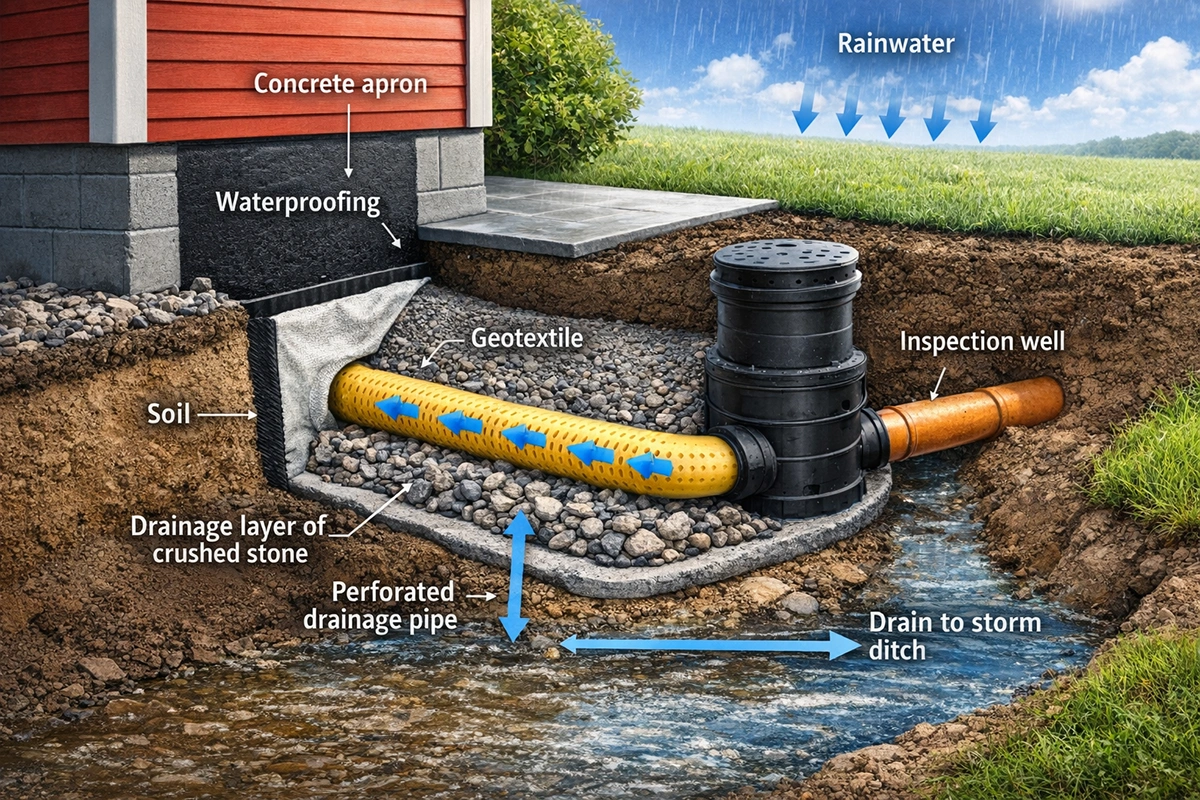
A footing drain is a drainage system installed around the perimeter of a home’s foundation at the level of the footing. When people search for what is footing drain, they are referring to a perforated pipe placed at the base of the foundation wall. It is commonly surrounded by gravel and wrapped in filter fabric to prevent soil from entering the pipe.
A basement footing drain is designed to intercept groundwater before it reaches the foundation walls. This system plays a critical role in reducing soil saturation near the structure and preventing pressure buildup that can cause leaks, cracks, and moisture intrusion.
How a Footing Drain System Works
A footing drain system operates by collecting groundwater and directing it away from the foundation. The perforated pipe allows water to enter as the surrounding soil becomes saturated. From there, the drainage pipe carries the water toward a safe discharge point—such as a storm drain, daylight outlet, or a sump pump basin if gravity drainage is not possible.
By consistently lowering the water level around the house, the system reduces hydrostatic pressure against the walls. Less pressure means fewer opportunities for water to seep through cracks, weakened mortar joints, or porous concrete. This makes footing drains a fundamental part of exterior foundation protection during the construction of new homes. In practice, they are often installed as part of a complete exterior waterproofing system that manages groundwater before it reaches the foundation walls.
What Is the Purpose of a Footing Drain and Why It’s Important
Understanding what is a footing drain and why is it important helps homeowners appreciate its role in the overall waterproofing strategy. Excess groundwater around the foundation increases moisture migration, contributes to basement dampness, and accelerates structural wear. Over time, this can lead to:
- Persistent basement leaks
- Mold and mildew growth
- Efflorescence on basement walls
- Structural cracks from shifting or pressure buildup
A properly functioning footing drain reduces these risks by managing water at the source—outside the foundation—before it has the chance to enter the home.
When a Basement Footing Drain Is Most Needed
A basement footing drain is essential during the construction of new homes, especially in climates with high rainfall, clay soils, or elevated groundwater levels. Homes built into hillsides or on low-lying terrain also benefit significantly from exterior drainage systems.
Existing homes may require drainage improvements when signs of excessive moisture appear, such as musty odors, wall dampness, peeling paint, or recurring leaks after storms. In such cases, replacing or supplementing the original footing drain may be necessary.
Do Footing Drains Actually Work?
The effectiveness of footing drains depends largely on installation quality and soil conditions. Installed correctly, they continue to work for many years and effectively lower groundwater levels around a home. However, homeowners should be aware of a few limitations:
- Potential for clogging: Over time, soil, silt, or tree roots can enter the system, reducing flow.
- Improper slope: If the drain is not installed with the correct pitch, water cannot travel efficiently toward the discharge point.
- Poor soil filtering: Without geotextile fabric, gravel, and clean backfill, the pipe can become blocked.
- Older homes: Many houses built decades ago have footing drains that have deteriorated or were installed without adequate filtration.
Despite these challenges, when properly designed and maintained, these systems remain an effective exterior drainage solution. They continue to play a key role in protecting basements, even when combined with modern waterproofing technologies.
Footing Drain System: Pros and Cons
Every footing drain system has advantages and limitations. Understanding both helps homeowners choose the right approach.
Advantages
- Reduces hydrostatic pressure on foundation walls
- Helps prevent basement leaks and seepage
- Supports long-term foundation stability
- Works passively without constant mechanical action
- Ideal for new construction where installation is straightforward
Limitations
- Can be difficult and costly to install on existing homes
- Requires proper slope and outlet access
- Susceptible to clogging without proper filtration
- Repairs often require excavation around the entire foundation
Because of these factors, many waterproofing contractors recommend combining exterior drainage with interior solutions for maximum protection.
Alternatives or Complementary Solutions
A footing drain is not the only method of managing foundation moisture. Modern systems often pair or replace exterior drainage with interior solutions, depending on the home’s structure and site conditions.
For many homeowners, especially in older houses, exterior excavation is not always practical. In these cases, interior waterproofing solutions can be used to control groundwater from inside the basement and relieve pressure beneath the foundation slab.
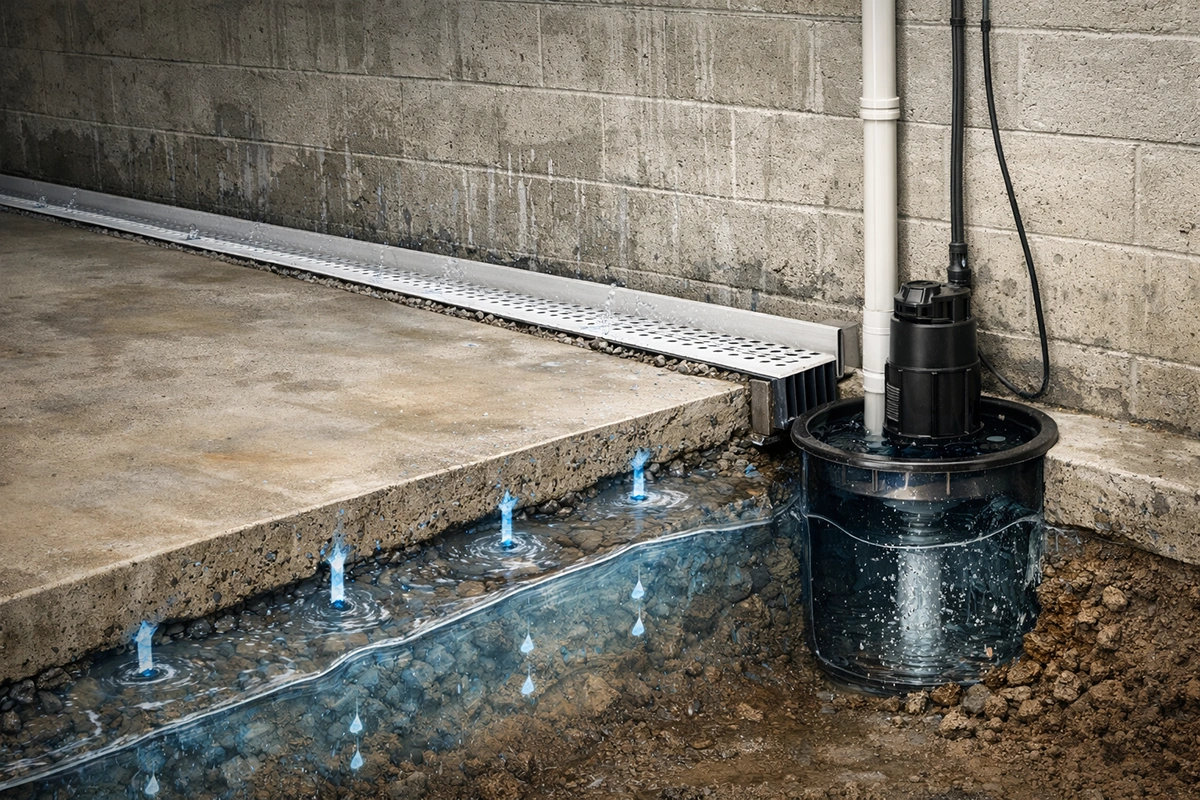
These approaches may include:
- Interior perimeter drainage systems located beneath the slab
- Sump pumps to remove groundwater actively
- Waterproofing membranes applied to foundation walls
- Proper grading and exterior soil management
- Downspout extensions and surface drainage improvements
For many older homes, an interior drainage system may be more practical than excavating the entire perimeter to replace a clogged exterior pipe.
Conclusion: Should You Rely on a Footing Drain?
A footing drain remains an effective method of protecting a foundation from groundwater. Homeowners who understand what is a footing drain, why it is important, and how a basement footing drain operates can make informed decisions about their waterproofing needs. While these systems work well when properly installed, they perform best when combined with modern waterproofing solutions that address both internal and external sources of moisture.
 CLOGGED OR BROKEN WEEPING TILE