
- What Is a French Drain?
- What Is a French Drain?
- When Is a French Drain Needed?
- Benefits of a French Drain
- How Is a French Drain Installed?
- How Can I Get a French Drain in Toronto?
When it comes to plumbing, there are a lot of words and features that aren’t common knowledge. At Leaquida Waterproofing, we’re making it our mission to educate the masses so that the average Joe knows what he needs and what to ask for. Today, let’s take a look at what the French drain is used for. What is a French drain? Let’s start there.
How Does a French Drain Work?
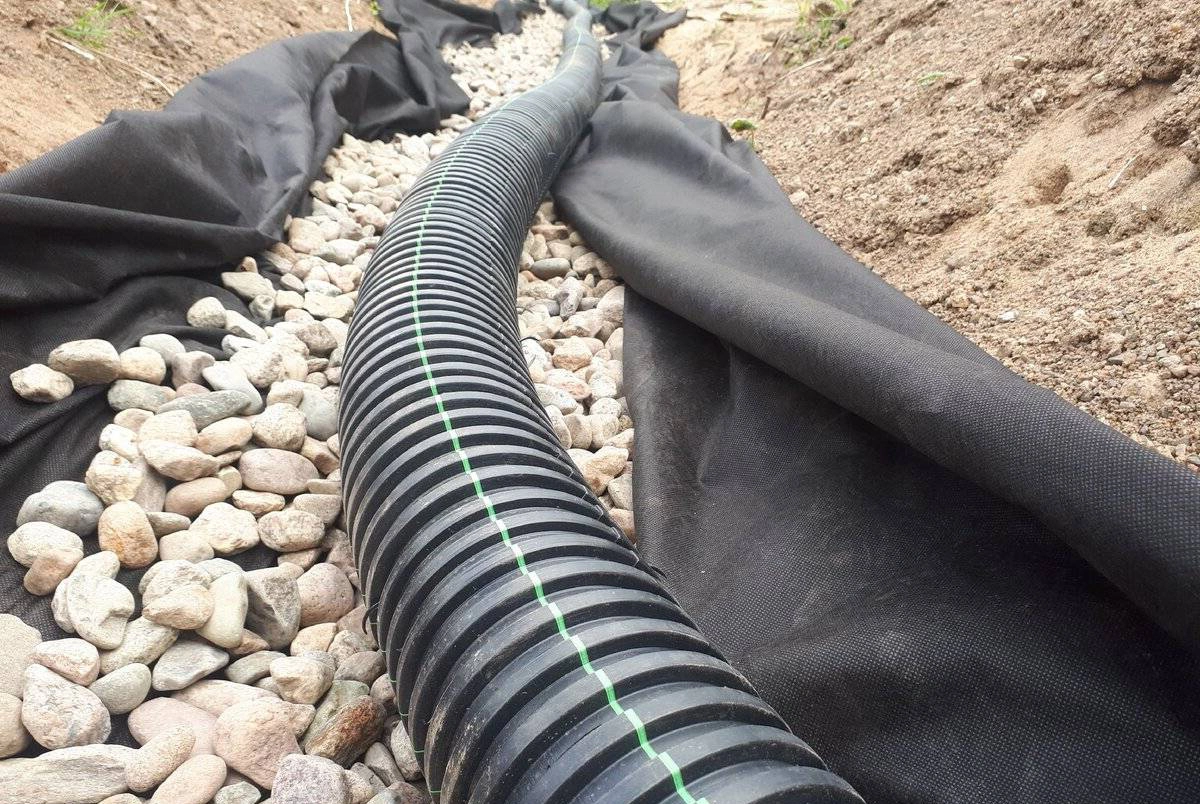
A French drain works by collecting excess groundwater or surface water and redirecting it away from your home. How does a French drain work in practice? The system uses a perforated pipe placed in a sloped trench that naturally guides water down and away from the problem area. Here’s how a French drain works step by step: water enters the gravel-filled trench, flows into the pipe, and is carried to a safe discharge point such as a storm drain or drainage ditch.
This explanation also covers the common question “how do French drains work”, since the principle is the same whether the system is installed around a house, along a driveway, or across a wet backyard. If you’ve ever wondered what French drains do, the answer is simple: they manage water so it doesn’t accumulate where it shouldn’t.
Need Help With Your French Drain?
💧 Not sure if your yard or driveway needs better drainage?
Our specialists will assess the problem and recommend the right solution, including a properly designed French drain installation.
👉 Get expert guidance today and stop water problems before they spread.
What Is a French Drain?
A French drain is, simply put, meant to prevent flooding at lower points in the ground. They’re most commonly found at the base of a sloping driveway – in front of the garage – and at the lower end of a sloped yard.
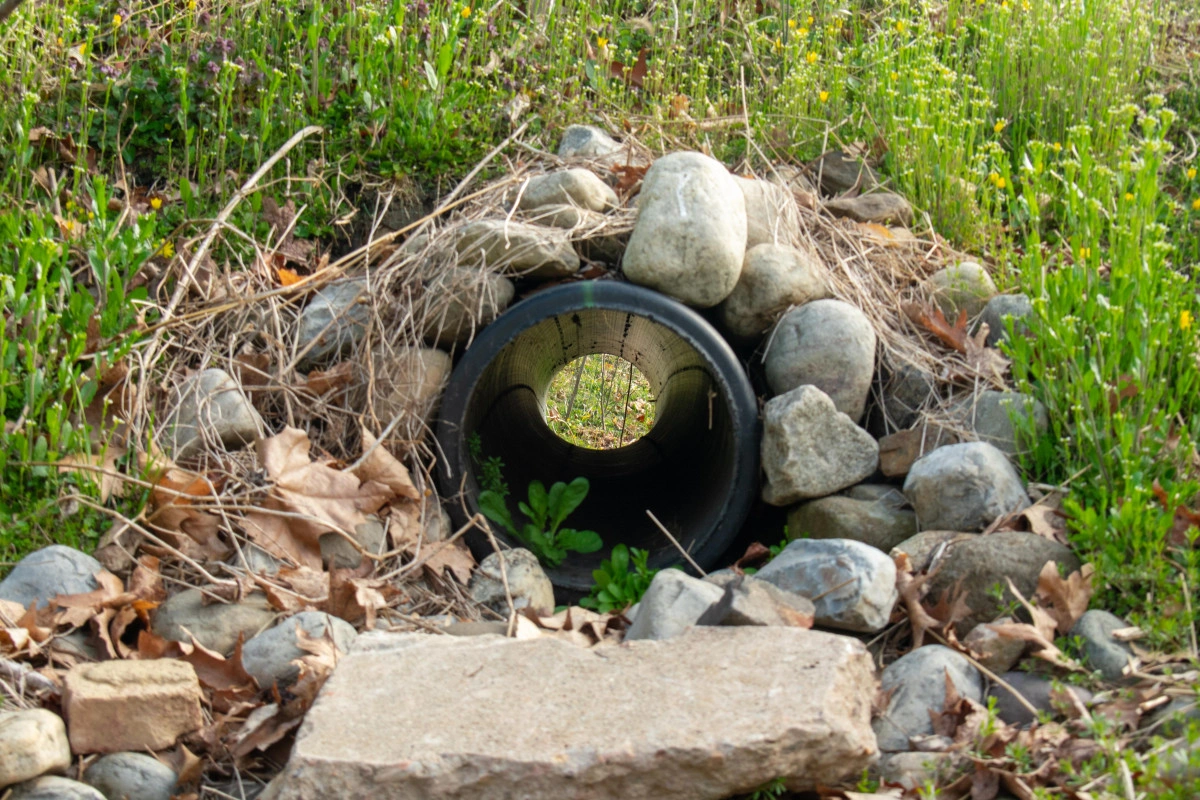
The drain prevents flooding and, instead, redirects water away from the house and yard. If there’s a nearby storm drain, your French drain can redirect water to there. Otherwise, a nearby ditch will do just fine.
When Is a French Drain Needed?
A French drain is needed when water consistently pools near your foundation, driveway, or in low areas of your yard. If you’re dealing with soggy soil, basement leaks, or a sloped driveway that funnels water toward the garage, a French drain is often the most reliable long-term solution. Homeowners frequently search “what does a French drain do” or “what is a French drain used for”—the answer is that it prevents flooding, soil erosion, and structural moisture damage.
If you notice that after heavy rain the ground stays wet for days or water flows toward your house instead of away from it, this is exactly when French drains work best. The system redirects this water safely, protecting both landscaping and the structure of your home.
Benefits of a French Drain
French drains offer several important advantages for homeowners dealing with poor drainage. First, they provide a passive, gravity-driven way to move water away from vulnerable areas around a house. This solves issues like foundation moisture, yard flooding and driveway runoff without mechanical pumps.
A French drain also reduces hydrostatic pressure around basement walls, protecting them from cracking and leaks. For many homeowners searching “French drain meaning”, one of the biggest benefits is simply peace of mind — knowing that rainwater and melted snow won’t accumulate where it can cause damage. You can even landscape over a French drain with gravel or decorative stone, allowing it to blend naturally into your yard.
Talk to a Drainage Specialist Today
🛠️ Water pooling around your foundation or driveway?
We’re available 7 days a week to diagnose the cause and offer a safe, long-term fix tailored to your home and landscape..
📞 Call us now or book a quick inspection online.
How Is a French Drain Installed?
If you’re wondering not just what the system is, but what is a French drain and how does it work during installation, here’s the process. Installation begins by planning a downward-sloped route so water can move naturally through the system. A trench is then dug, typically 8–12 inches wide and deep enough to create the required slope.
The trench is lined with landscape fabric and filled partially with gravel. A perforated pipe is placed inside, with holes facing downward. This design is essential for how French drains work because it lets water enter the pipe slowly and prevents clogging. After the pipe is set, it’s covered with more gravel and wrapped with fabric to filter sediment.
Many homeowners consider installing a French drain on their own, but it’s important to understand that proper grading, soil preparation, and filtration materials are essential for long-term performance. Even a small mistake — such as an incorrect slope, poorly compacted soil, or using the wrong gravel — can cause water to stagnate instead of flowing through the system. Professional installation ensures that the drain redirects water efficiently and remains functional for many years without clogging or collapsing.
How Can I Get a French Drain in Toronto?
If you’re looking for a French drain to be installed somewhere in Toronto, Leaquida Waterproofing is here to help. Give us a call and we can give you a visit to work up a price estimate. We look forward to hearing from you and improving your yard’s drainage!
FAQ
Yes. By lowering groundwater levels around your foundation, a French drain reduces pressure on basement walls and helps prevent moisture intrusion.
Only minimal upkeep is needed. Periodic inspection and removing debris from the discharge point help the system stay efficient for many years.
Depth depends on the area, but most systems are placed below the level where water tends to collect — usually 6–18 inches, or deeper near foundations.
Yes. The trench can be created without damaging landscaping; gravel and stones can be added decoratively to blend the drain into the yard.
When installed with proper slope and filtration, French drains handle large volumes of water from heavy rain and seasonal melting very effectively.
Not always. Some yards need regrading or gutter improvements. A drainage specialist can determine whether a French drain is the most effective option.
 CLOGGED OR BROKEN WEEPING TILE