
- A Little Of The History Of French Drains
- What you need a sump pump for
- Peculiarities of installation and operation of the drain pump
A sump pump in the French drainage system is one of the most effective ways to protect Canadian basements from groundwater, snowmelt, and heavy rainfall. When combined with a properly installed French drain, the sump pump collects rising water around the foundation and pumps it safely away from the home, preventing moisture buildup, flooding, and long-term structural damage. Below, we explain how the system works, why it’s essential in Canada, and what homeowners should know about installation and maintenance.
A Little Of The History Of French Drains
The French drain is, no matter how strange it sounds, an American creation that can effectively prevent basement flooding by quickly and efficiently removing excess moisture. The first systems were developed specifically for houses that were built in the 19th century. At that time in Massachusetts, many homes were suffering from constant water in the basement of the house.
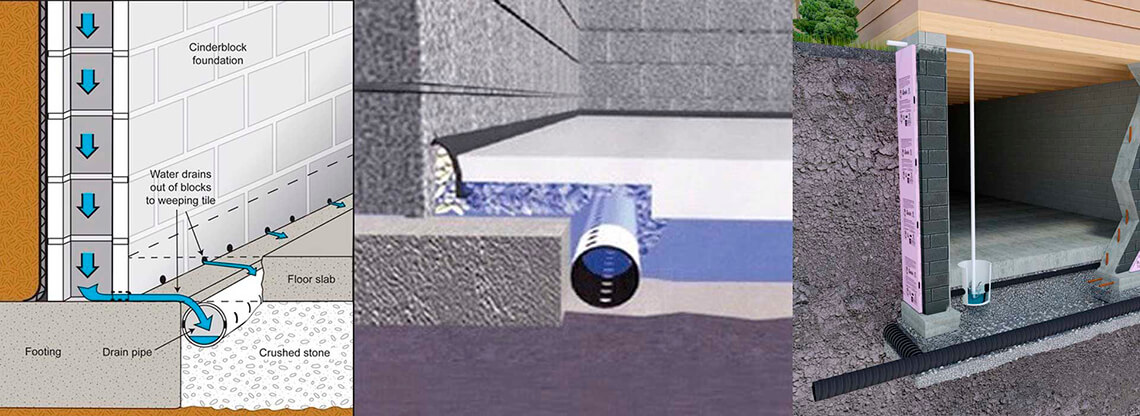
By design, a French drain is a reasonably wide drainage pipe that runs around the perimeter of the base of the building. The pipe itself is perforated to allow water to enter it. The primary function here is the force of gravity – it draws the accumulated moisture into the sump pit from the basement. Once the pit is filled with a certain amount of water, the sump pump with the french drain starts working, flushing the water from the basement into the ditch.
If you think about it, the system presented is a cycle – first, the water comes from the outside, and then it is pumped out. Many people think about simply making an open pit w-here the water will be discharged. Of course, there are open pits, but they often act as secondary pits, and there are water and flooding problems. An outdoor pit will cost quite a bit of money, and it’s also much more challenging to get to it to perform regular maintenance than a basement pit. Also, it must be pretty deep, so it is often created in an area with a reasonably high water table.
What you need a sump pump for
A sump pump in a french drain is one of the most important systems that allows you to protect property from potential damage. More often than not, homeowners need to pay more attention to the equipment presented. In practice, they sometimes hear the sump pump activation. In particular, it works the most during springtime or when the rainy season comes. The frequency of activation depends on the specific operating conditions. In some homes, the sump pump operates daily while suddenly only activating periodically. It is essential that the presented equipment faithfully performs the main task – pumping water from the basement.
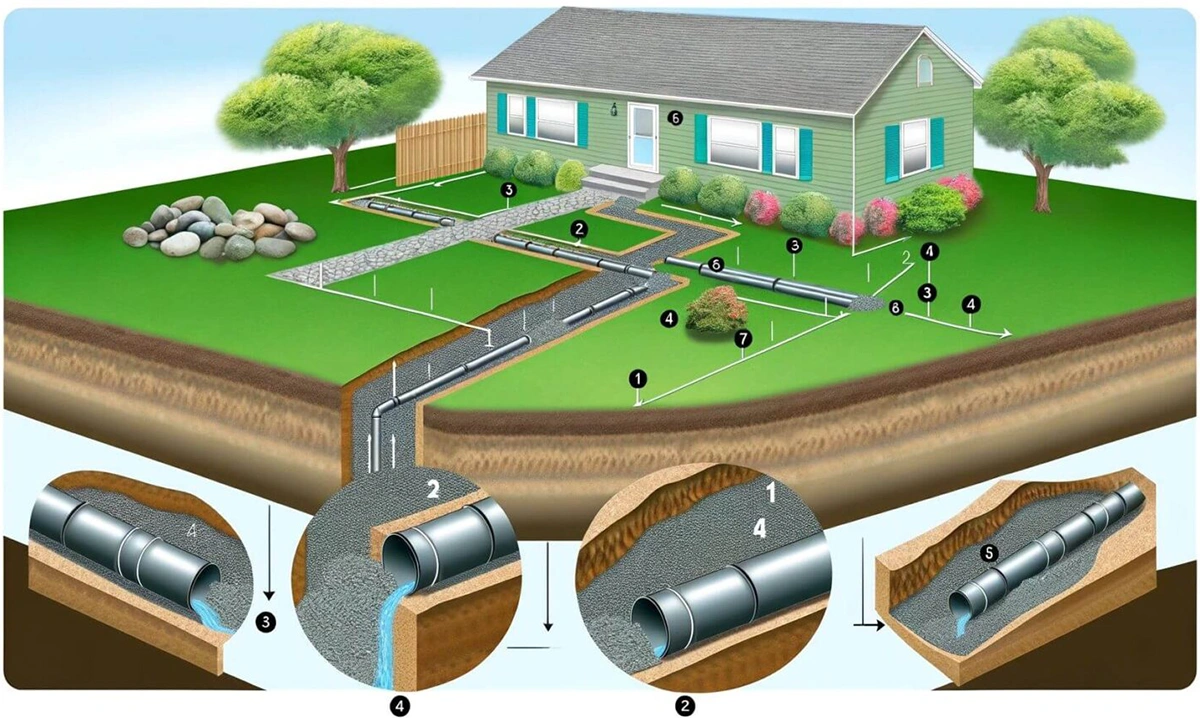
As for the basic principle of operation, this drainage system is quite simple. In this situation, it is necessary to create a drainage line around the house so it diverts excess water from precipitation, which penetrates the house. First, a simple hand pump is used to pump the water out of the house, collecting the water in a special tank. The collection tank is then pumped out again, taking the water far beyond the base of the building, several feet away, so the moisture is not back into the house.
A variety of pump types can be used in a drainage system. There are 2 in total:
- Submersible. Presented equipment is mounted underwater in a sump. These pumps are great for sumps or pits of a reasonably large size. As for the principle of the operation itself, the submersible pump works slower. It is also a little more challenging to work with in terms of maintenance if you compare the device with models mounted above water.
- Pedestal pumps. It is special equipment, and the motor is located above the water level. It is advisable to mount it when there is a small pit or sump on the site. This drainage pump can boast a relatively simple design and easy operation. It is easy to get to the pump if you need to service it.
Choosing the correct pump type depends on the sump’s size and where precisely the equipment will be located – above water or underwater. Specialists will advise you on the best model to use in your situation. They will also calculate the power of the equipment and other vital parameters.
Peculiarities of installation and operation of the drain pump
Often the installation of the French drainage system, together with the drainage pump, is carried out immediately after the construction of the house. It is necessary for the situation of constant humidity in the basement. It is advisable to install it before finishing the basement. In this situation, first, the perimeter of the basement floor is required to pass with a jackhammer to remove the concrete. After that, fine crushed stone is laid, and on top of the pipe is mounted for French drainage with perforation. After that, water will be collected from the joints of the basement wall and flooring as it accumulates. As for the pump itself, it is mounted in a particular hole in the lowest point of the basement to effectively remove water from the house and basement floor, preventing waterlogging of the house. A less critical rule of competent installation of a drainage pump is that the equipment must be put in such a way that it is not in the sewer. Otherwise, it is a severe violation of state regulations.
Drainage pumps are actively used in a variety of homes. They are needed to remove excess water after heavy rains or storms effectively. Often the presented equipment is connected to a backup power system from batteries so that the pump will continue to work in the event of a power outage, effectively coping with the potential flooding. It is best to have four batteries at once so the pump will work even if there is no electricity for a long time. A sump pump does not only function on battery power. It can also be plugged in. Often the batteries are left on the shelf until a particular time. But in this situation, it is worth checking on their condition from time to time so that they will be operational when the power goes out.
The basement should be kept as dry as possible in all weather conditions. The average life of a drainage pump is about 10 years with proper maintenance and proper operation. It all depends on the quality and regularity of maintenance of the equipment. Preventive maintenance is worthwhile from time to time to remove debris and potential clogs from the piping.
FAQ
In a French drain system, perforated pipes collect groundwater around your foundation and direct it into a sump pit. When the water level in the pit rises, the sump pump turns on and discharges the water safely away from your home, helping keep your Canadian basement dry during heavy rain and snowmelt.
Yes. In many parts of Canada, basements are exposed to high groundwater, spring thaw, and intense rainstorms. A French drain combined with a sump pump is one of the most effective ways to reduce hydrostatic pressure on the foundation and prevent basement flooding.
Discharge should typically go outside, away from the foundation on a proper slope, or into an approved storm drainage point. It should not discharge into the sanitary sewer. Exact rules vary by province and municipality, so always check local regulations or consult your city before installation.
It’s strongly recommended. In Canada, heavy storms that raise groundwater levels can also cause power outages. A battery backup system keeps your sump pump running when the main power is off, providing extra protection against flooding.
For Canadian basements, it’s best to test the sump pump every few months by pouring water into the pit to ensure it turns on and discharges properly. A full inspection and cleaning of the pump, pit, and check valve at least once a year helps prevent failures during spring melt and heavy rain.
 CLOGGED OR BROKEN WEEPING TILE