
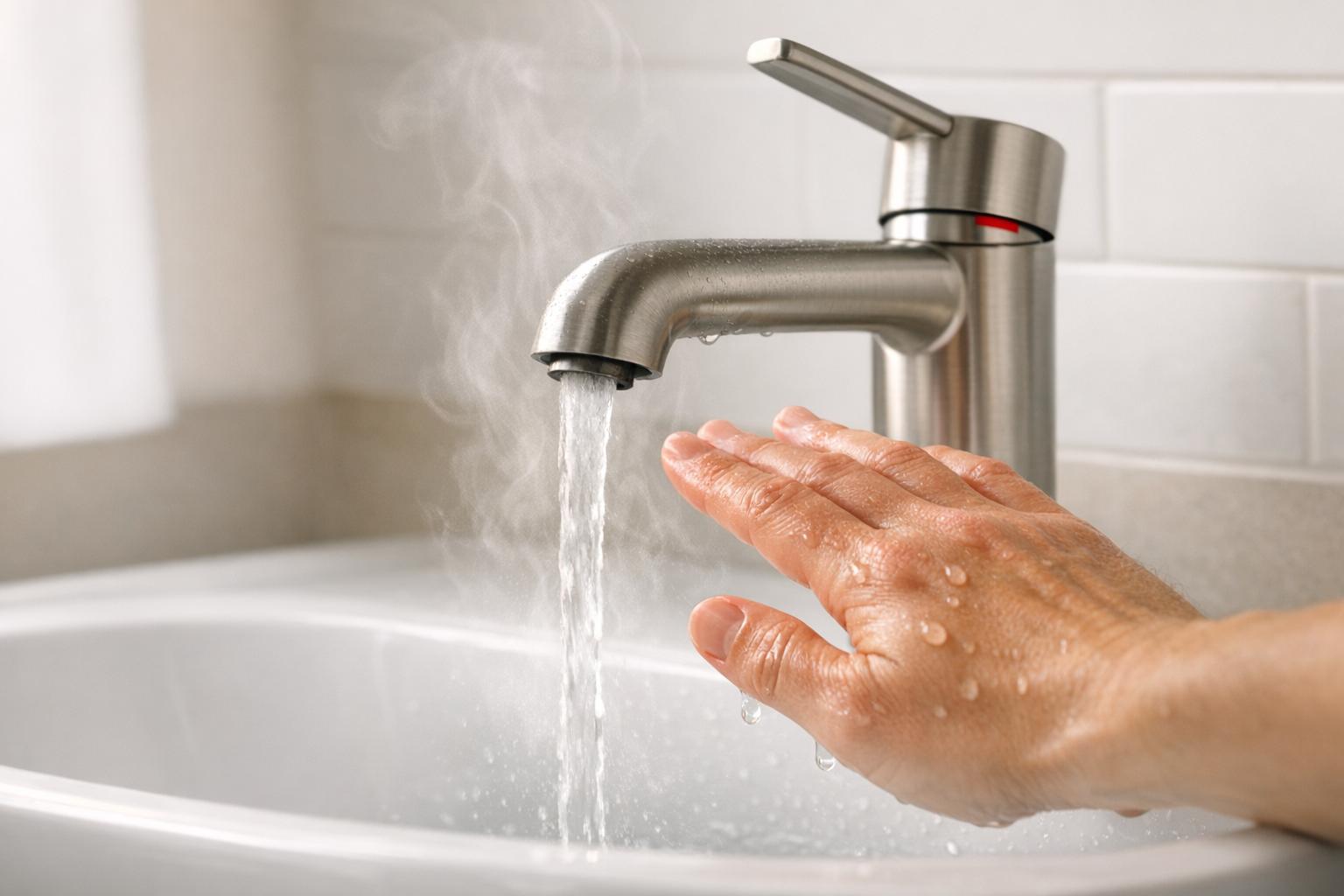
When your hot water suddenly becomes scalding, it’s likely a sign of a problem with your water heater or plumbing system. These temperature spikes aren’t just uncomfortable – they can be dangerous, especially for children and older adults. Water above 49°C (120°F) can cause burns in seconds, and ignoring the issue could lead to costly repairs or safety risks.
Common Causes:
- Faulty Thermostat: Malfunctions can cause overheating.
- Broken Heating Element: Stuck elements can continuously heat water.
- Sediment Build-Up: Minerals in the tank disrupt heat regulation.
- Mixing Valve Failure: Worn-out valves fail to balance hot and cold water.
- Plumbing Cross-Connections: Hot and cold lines mix improperly.
Warning Signs:
- Scalding water despite safe thermostat settings.
- Rumbling or popping noises from the tank.
- Leaking relief valves or pooling water.
- Rust-coloured or metallic-tasting water.
Solutions:
- Check your thermostat and water temperature (shouldn’t exceed 49°C at the tap).
- Flush the tank annually to remove sediment.
- Replace faulty components like thermostats or mixing valves.
- Call a professional if repairs are complex or the water heater is over 10 years old.
Regular maintenance and inspections are key to preventing these issues. If you notice persistent overheating, it might point to deeper problems like basement moisture or plumbing issues that require professional attention.
Water Too Hot: Electric Water Heater Troubleshooting
sbb-itb-5761e20
What Is a Safe Hot Water Temperature?
Hot Water Temperature Safety Guide: Burn Times and Recommended Settings
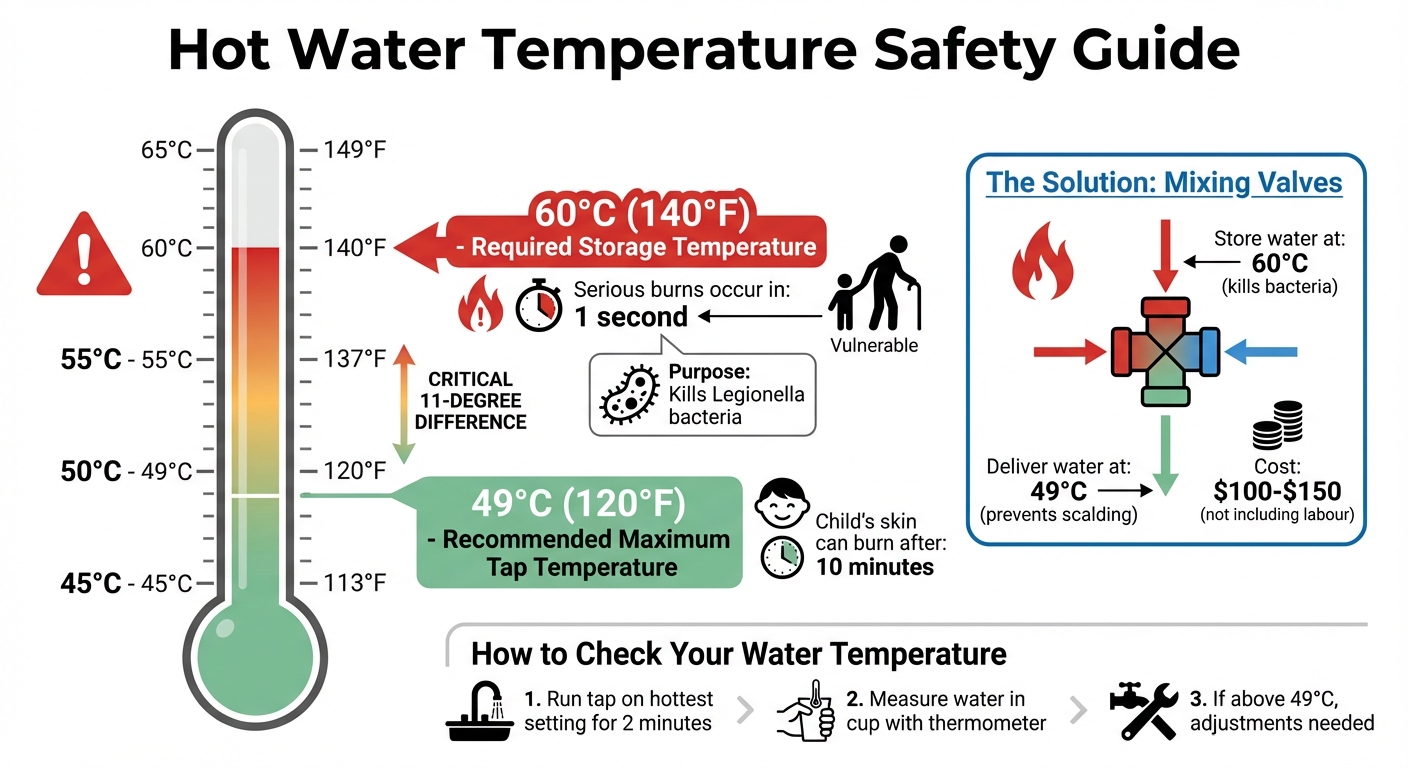
In Canada, the recommended maximum tap water temperature is 49°C (120°F). This guideline is in place to reduce the risk of scalding, especially for children and older adults. At 49°C, a child’s skin can burn after 10 minutes of exposure. But if the water temperature rises to 60°C (140°F) – just 11 degrees higher – serious burns can occur in just 1 second.
Interestingly, while tap water should stay below 49°C, the water stored in your tank must be kept at 60°C (140°F). This is necessary to kill Legionella bacteria, which can cause Legionnaires’ disease. The Government of Canada recommends maintaining water heaters at 60°C to prevent bacterial growth.
So, how do you balance safety and health? The answer lies in mixing valves (also called tempering valves). These devices allow water to be stored at 60°C to combat bacteria while ensuring it’s delivered at a safer 49°C from your taps. The Canada Safety Council puts it simply:
The bottom line is that water must be stored at a high temperature as a precaution against bacteria. It can be delivered from the tap at a lower temperature to prevent scalds.
To check your water temperature, run your tap on its hottest setting for two minutes, then measure the water in a cup with a thermometer. If the temperature exceeds 49°C, you’ll need to make adjustments. This could involve tweaking the water heater or installing mixing valves, which generally cost between $100 and $150, not including labour.
For electric water heaters, it’s important to avoid lowering the thermostat below 60°C, as this temperature is critical for preventing bacterial growth. Instead, rely on external mixing valves to regulate the temperature at the tap.
With the basics of safe water temperatures covered, let’s explore what causes sudden spikes in hot water temperatures.
Common Reasons Why Hot Water Suddenly Gets Too Hot
Sudden spikes in water temperature can be both frustrating and dangerous. These unexpected changes often signal problems within your water heating system that need to be addressed promptly.
Faulty or Misadjusted Thermostat
Your water heater’s thermostat is responsible for regulating the temperature by controlling when the heating element turns on and off. If the thermostat is damaged, incorrectly set, or worn out, it may fail to turn off the heating element at the right time. This can result in overheating. In electric water heaters, there are often two thermostats – one at the top and one at the bottom – so a malfunction in either can cause the water to become dangerously hot.
Broken Heating Element
In electric water heaters, a heating element that gets stuck in the “on” position can continuously heat the water. For gas water heaters, a similar issue can occur if the gas valve controlling the burner fails to shut off properly. Both scenarios lead to water temperature surges that are not only inconvenient but also potentially hazardous.
Sediment Build-Up in the Tank
Hard water, common in many parts of Canada, especially Ontario, can lead to mineral deposits collecting at the bottom of your tank. Over time, this sediment creates a barrier between the heating element and the water. According to Dan Walsh from AAA Home Services:
The sediment layer acts like a blanket between your heating element and the water, making it much harder for your system to maintain consistent temperatures.
When the heating element activates, the trapped water in the sediment layer can turn to steam, causing sudden bursts of hot water. You might hear popping or rumbling noises – similar to a kettle boiling – indicating sediment buildup. This issue not only affects temperature consistency but can also reduce the efficiency of a gas water heater by 6–8% within two years.
Malfunctioning Mixing Valve
Mixing valves are designed to blend hot and cold water for a stable, safe temperature at your taps. When these valves fail – due to wear, mineral buildup, or a broken cartridge – they may allow scalding water to flow directly to your fixtures. Older homes, especially those built before the 2000s, may have standard mixing valves that lack modern protections like pressure-balancing or thermostatic features. Signs of a failing mixing valve include erratic temperature shifts, a handle that sticks or grinds, or water dripping even when the valve is off.
Cross-Connection Issues in Plumbing
Cross-connections occur when hot and cold water lines unintentionally mix, disrupting the temperature balance. This can happen due to faulty check valves, improperly installed fixtures, or backflow from appliances. These issues can send unexpectedly hot water to your taps, creating a safety hazard.
Addressing these problems early is essential, as they not only affect water temperature but also pose risks to your safety. Up next, we’ll explore how to spot warning signs that your water heater may need immediate attention.
Signs Your Water Heater Needs Immediate Attention
Your water heater often gives you plenty of warning before it fails completely. As Licensed Master Plumber Eric Olson points out:
“A water heater rarely fails all at once. It sends signals for months, sometimes years, before the tank gives out.”
These early warnings are your chance to fix problems before they escalate.
One of the first signs is scalding hot water. If your water feels dangerously hot – even though your thermostat is set to a safe level (around 49°C/120°F) – it’s a clear signal that something isn’t working properly.
Rumbling or banging noises are another red flag. These sounds often mean sediment has built up inside the tank. As water gets trapped under the sediment, it can turn to steam and cause loud eruptions. If you hear boiling or banging, turn off the power or gas and shut off the water supply immediately to prevent a potential tank burst [14,15].
A leaking temperature and pressure (T&P) relief valve is also a serious issue. This valve is designed to release excess pressure safely, but if it’s constantly dripping or “weeping,” it could mean your water heater is under dangerous internal stress [14,15].
If you notice water pooling at the base of your heater, it’s time to act quickly. While a minor leak might be fixed by tightening a loose fitting, leaks coming from the tank itself usually indicate internal corrosion, which could lead to total failure.
Pay attention to discoloured water, too. Run hot water into a clear glass – if it’s rusty, brownish, or orange while your cold water remains clear, it’s likely your tank’s sacrificial anode rod has worn out, and the tank is corroding from the inside. A metallic taste, a rotten egg smell, or visible rust flakes and mineral buildup on pipes further confirm internal deterioration.
Ignoring these issues can be expensive. Water damage from a leaking heater can cost around $9,000, and insurance might not cover it if the problem stems from neglect. If your water heater is over 10 years old and showing any of these signs, replacing it might be smarter than repairing it – especially if the repair costs are close to or more than half the price of a new unit.
Is It Dangerous? (Safety Risks Explained)
Hot water systems that operate at excessively high temperatures come with serious hazards, including scalding injuries and the rare but catastrophic risk of tank explosions. Knowing these risks highlights the importance of maintaining proper temperature settings in your water heater.
Water that’s too hot can cause severe burns in mere seconds, especially for vulnerable groups like children and the elderly. For example, using water above 45°C when filling a bath or washing dishes significantly increases this risk. However, storing water below 45°C to reduce scalding risks can encourage the growth of Legionella bacteria, which is why health authorities recommend keeping water heaters set to at least 60°C.
Another danger, though less common, involves potentially explosive tank failures. These occur when the temperature and pressure (T&P) relief valve malfunctions – often due to being stuck, blocked by mineral buildup, or improperly capped – while the heating element continues to operate. Such failures can lead to devastating consequences. In one controlled test, a water heater with disabled safety mechanisms completely destroyed a small house built to California building codes. Other documented cases include tanks blasting through two-storey homes and landing on front lawns. In one extreme instance, a faulty water heater reached internal temperatures of 138°C (280°F) and pressures of 80 psi, far exceeding its design limits.
Excessive heat also increases pressure within your plumbing system, which most residential setups are not equipped to handle beyond 80 psi. Overheated water expands, putting stress on tanks and pipes. This can lead to ruptured tanks, leaking pipes, and damage to appliances like dishwashers and washing machines.
Anna Conda, a member of Heating Help, explains the root cause of these risks:
The most common causes of boiler explosions are the combination of a) failed LWCO and b) failed relief valves. Neglect is the most common cause of those safety failures.
If you notice concerning signs like rumbling, groaning, or high-pitched whistling from your water heater, leave the area immediately and shut off the fuel source from a safe distance. Never attempt to fix an overheating water heater yourself. Allow it to cool down for several hours before contacting a professional.
These dangers underscore the importance of addressing water heater issues promptly, a topic covered in the next section.
How to Fix the Problem
DIY Troubleshooting Steps
If you’re dealing with hot water temperature issues, it’s important to start with some basic troubleshooting before calling in a professional. First, measure your hot water temperature. Let the hottest tap run for two minutes, collect the water in a large glass or measuring jug, and use a cooking or baby thermometer to check the temperature accurately. This gives you a baseline to understand how far off your water heater is from the ideal setting.
The next steps will depend on the type of water heater you have:
- Combi boilers: These heat water on demand. Adjust the tap temperature control on the boiler slightly, then re-test immediately. Since combi boilers heat water as it flows, you’ll see results right away.
- System or heat-only boilers with a hot water cylinder: Locate the thermostat on the cylinder, which might be behind a panel. Use the dial or a screwdriver to lower the temperature. You’ll need to wait a few hours or drain the hot water to allow the cylinder to cool before testing again.
- Immersion heaters: Remove the cover, adjust the thermostat with a screwdriver, and wait for the tank to cool before rechecking.
Safety Tip: Never set stored water below 60°C. If you need lower tap temperatures, install a mixing valve to avoid scalding risks while preventing bacterial growth.
If these steps don’t resolve the issue, it’s time to bring in a professional.
When to Call a Professional
Sometimes, DIY fixes just aren’t enough. If adjusting the thermostat doesn’t work or you notice structural issues, it’s best to call a licensed technician. For natural gas or propane water heaters, always leave repairs to trained professionals – attempting them yourself can be dangerous.
Here are some signs you need professional help:
- Leaks under the tank
- Rust-coloured water
- Unusual noises like popping or rumbling
- A red-tagged unit flagged for safety violations
Age is another factor. Gas water heaters over 15 years old, or electric ones between 10 and 15 years, are often better replaced than repaired.
When hiring a service provider in Canada, look for licensed and insured technicians who provide clear, fixed-price quotes upfront. Reputable companies often include a one-year parts warranty and a 90-day labour warranty with repairs. If your water heater issues are tied to basement problems like flooding or excess moisture, companies like Leaquida Waterproofing specialize in addressing these underlying causes.
Here’s a quick guide to common repairs, their costs in CAD, and what symptoms they address:
| Repair Type | Estimated Cost (CAD) | Primary Symptom |
|---|---|---|
| Thermostat replacement | $150–$300 | Water too hot, too cold, or temperature swings |
| Heating element (electric) | $150–$250 | No hot water or insufficient heat |
| Sediment flush | $100–$200 | Rumbling noises or lower efficiency |
| Pressure relief valve | $100–$200 | Dripping valve or failed pressure test |
| Gas valve replacement | $250–$500 | Burner not igniting or uneven heating |
| Tankless descaling | $150–$300 | Reduced flow or efficiency loss |
Pro Tip: Follow the 50% rule – if the repair costs more than half the price of a new water heater (around $1,800–$2,500 CAD installed in Toronto), replacing it is usually the smarter choice. For inspections and diagnostics, expect to pay $99 plus HST on weekdays or $129 plus HST on weekends and holidays.
Preventing Future Issues
To keep your water heater in top shape, make it a habit to drain and flush the tank every 6–12 months. If you live in an area with hard water or rely on well water, consider flushing it more frequently. This simple step helps remove sediment like calcium and magnesium deposits, which can otherwise interfere with heat transfer and efficiency.
Check your thermostat annually and ensure it’s set to 49°C (120°F). This prevents dangerous temperature swings and keeps your system running smoothly. For tankless water heaters, an annual descaling process is essential. Use a pump kit and a manufacturer-recommended solution to clean the heat exchanger and avoid mineral build-up, which can cause overheating issues.
Scheduling professional inspections twice a year is another smart move. A licensed technician can catch minor problems before they turn into costly repairs. During these visits, they’ll test critical components like the pressure relief valve, inspect the sacrificial anode rod (usually checked every two to three years), and ensure gas venting or electrical connections are secure. Professional flushing services typically cost between $100 and $250 – far less than emergency repairs or a full replacement.
Stay alert for warning signs such as rumbling, popping, or sizzling noises, as well as cloudy or rust-coloured water. These are clear indicators of sediment build-up and signal that your water heater needs immediate attention.
If you live in a hard water area, installing a water softener can slow mineral accumulation. Pairing a water softener with regular thermostat checks and professional maintenance will keep your water heater running efficiently and safely for years to come.
When the Problem Might Be Bigger Than Plumbing
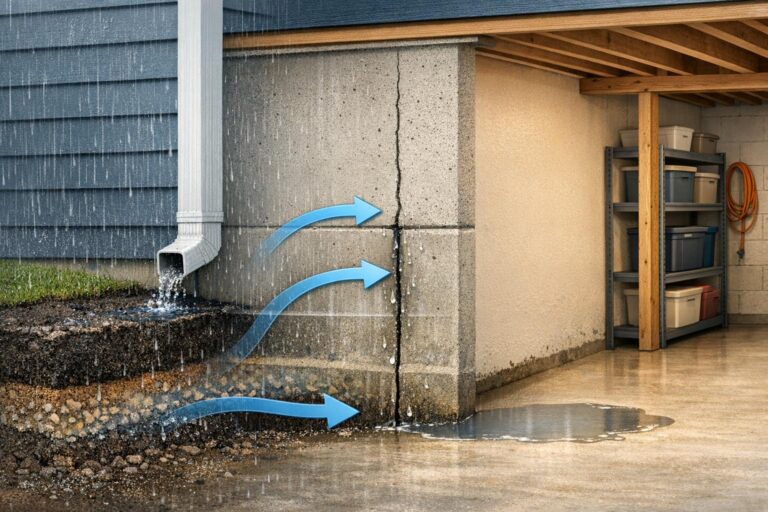
Sometimes, the challenges with your water heater go beyond simple maintenance issues. External factors, like foundation or basement waterproofing problems, can significantly impact its performance. For instance, excessively hot water could hint at moisture intrusion caused by cracks, poor drainage, or flooding. These conditions speed up sediment buildup and corrosion inside the tank. Domenic DeLeo, VP of Residential Installation at Isaac Heating & Air Conditioning, highlights this concern:
Exposure to flood conditions causes corrosion of controls and components. There may also be a build-up of dirt and debris… the gradual build-up of dirt and corrosion over time can render safety devices inoperative.
If you notice puddles around your water heater, the cause might not be the heater itself. Foundation seepage, appliance drainage, or general basement humidity are common culprits. External water exposure can even damage critical components. For example, gas control valves can fail after being submerged in just 40 cm of water.
Foundation issues, particularly when left unchecked, can repeatedly corrode your water heater. Continuous water intrusion not only accelerates sediment accumulation but can also lead to damage so severe that replacement becomes the only option. This is why addressing structural water problems is key. Without resolving these underlying issues, your water heater may suffer ongoing damage even after repairs.
When the moisture stems from your home’s structure, the solution requires tackling both the water heater and the root cause. If you suspect foundation problems or persistent basement dampness are to blame, consider professional help. Leaquida Waterproofing offers services like exterior waterproofing (costing $100 to $250 per linear foot), foundation crack repair (ranging from $500 to $1,200 per crack), and drainage system upgrades. These measures not only protect your water heater but also safeguard your home’s plumbing infrastructure from future water damage.
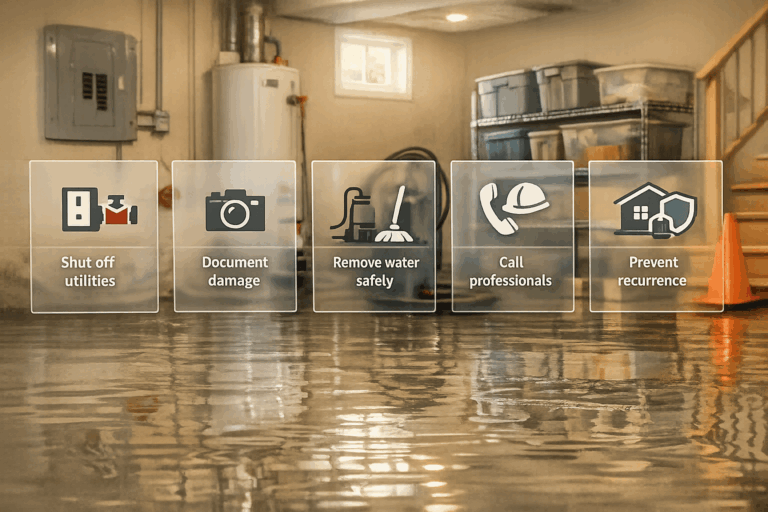
Take the time to photograph any moisture sources near your heater and inspect the area thoroughly. This documentation can be incredibly useful for professionals to determine whether the issue lies with the heater itself or with structural problems.
Conclusion
When your hot water suddenly gets excessively hot, it’s more than just an inconvenience – it’s a safety concern. Keeping your tap water at the recommended temperature is critical to avoid scald injuries. Problems such as thermostat malfunctions, faulty heating elements, sediment buildup, mixing valve issues, or plumbing cross-connections should be addressed promptly to prevent further complications.
Regular maintenance is key. For tank models, flushing the tank annually clears out sediment that can cause uneven heating and reduce efficiency. Meanwhile, tankless water heaters require yearly descaling to prevent mineral buildup on heat exchangers. These simple steps not only help prevent overheating but also extend the lifespan of your water heater. Don’t forget to check flue pipes and wiring regularly to reduce fire risks and the danger of carbon monoxide leaks.
If basic maintenance doesn’t solve the problem, it’s time to call in a professional. Certain issues, like faulty gas valves, blocked flues, or persistent electrical problems, pose serious risks and should never be tackled as DIY projects. Annual professional inspections can identify and address defective components before they escalate into hazardous situations.
Ongoing overheating may hint at deeper structural problems, like foundation issues or basement moisture, that could be impacting both your water heater and your home. Addressing these root causes with interior basement waterproofing and drainage systems can protect not only your appliance but also your home’s integrity. Always prioritise safety – watch for warning signs like steam or strange noises – and stay on top of maintenance to enjoy safe, reliable hot water all year long.

 CLOGGED OR BROKEN WEEPING TILE