
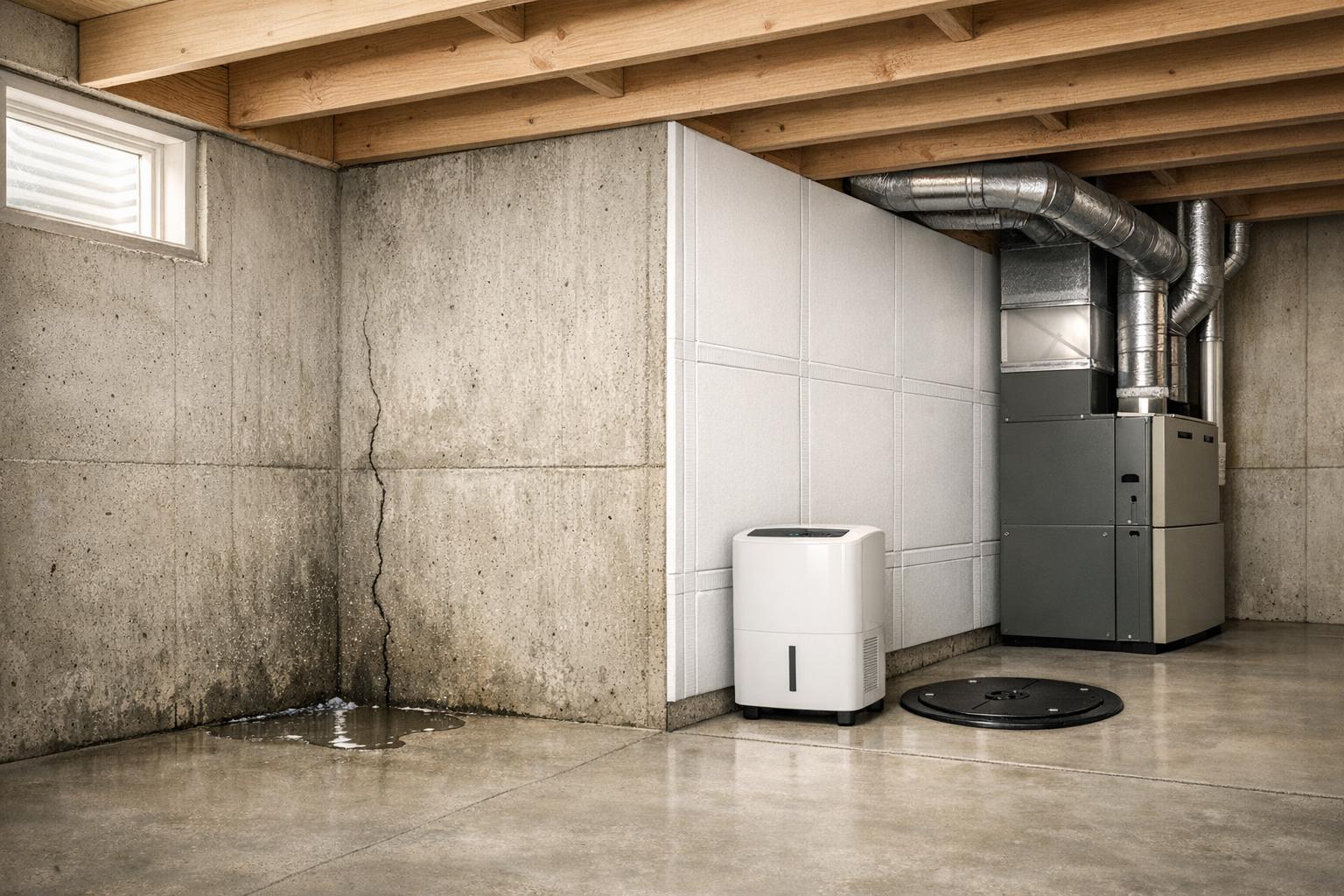
A wet basement can harm your home’s air quality, increase energy bills, and even lower its value. Excess moisture promotes mould growth within 48 hours, spreads allergens, and forces your HVAC system to work harder. Additionally, water damage weakens insulation, foundation walls, and structural elements, leading to higher heating and cooling costs.
Here’s what you need to know:
- Health risks: Mould and dust mites thrive in damp conditions, aggravating asthma and allergies.
- Energy costs: Humid air is harder to heat or cool, and wet insulation loses its effectiveness.
- Structural damage: Water weakens foundations, corrodes metal, and rots wood.
- Signs: Musty odours, water stains, efflorescence, and rising utility bills can point to moisture issues.
To fix the problem, focus on waterproofing, improving drainage, sealing gaps, and maintaining humidity levels between 30–50%. Exterior waterproofing, sump pumps, and proper grading can protect your home from further damage while improving energy efficiency and air quality.
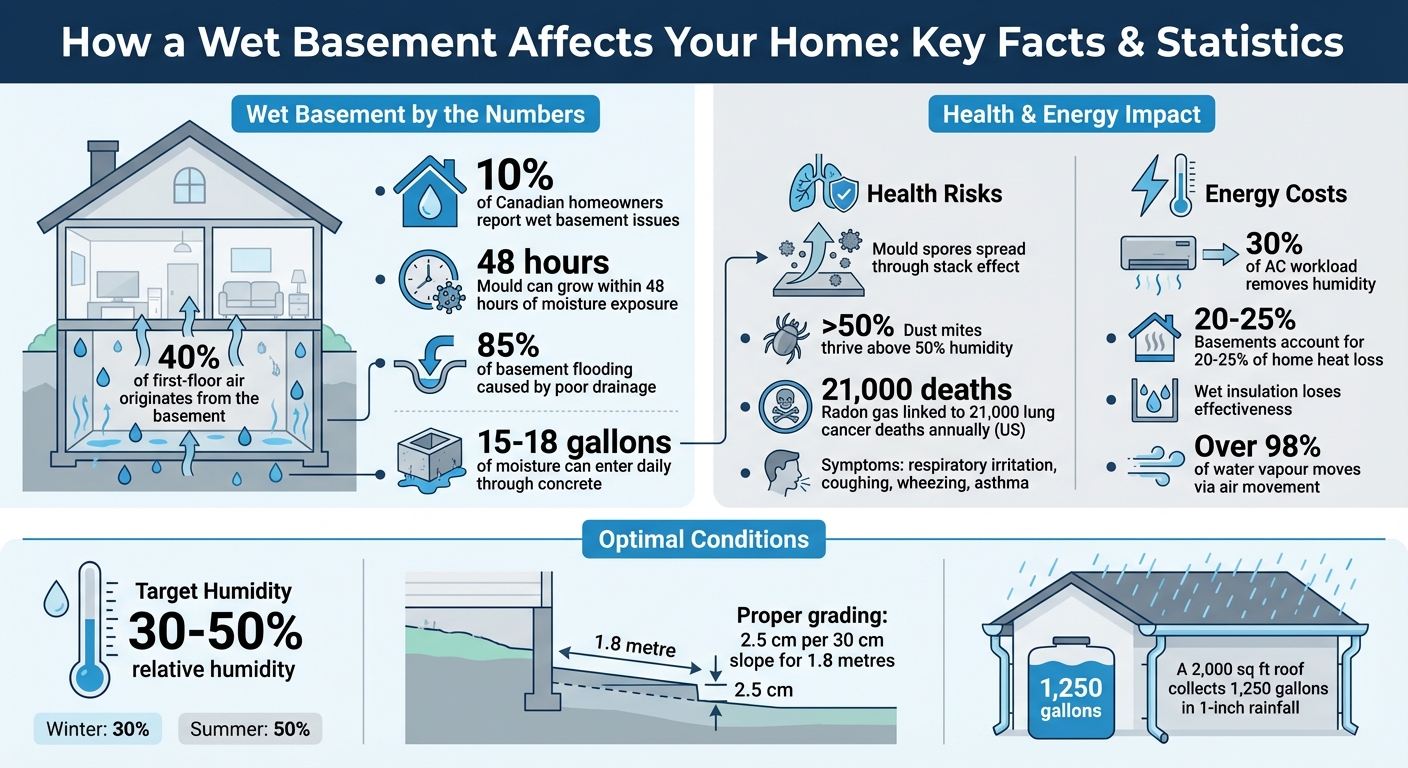
Wet Basement Impact: Health Risks, Energy Costs, and Key Statistics
How dangerous is basement mold?
sbb-itb-5761e20
What Is Considered a Wet Basement
A wet basement refers to a basement with visible water or consistently high moisture levels. This can range from puddles on the floor to water seeping down walls or an overall damp environment. Across Canada, about 10% of homeowners report dealing with a wet basement, highlighting how common the issue is.
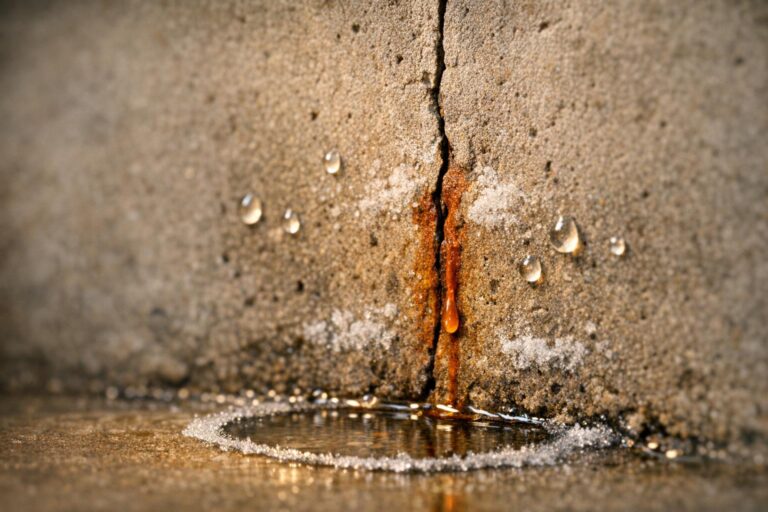
There are several telltale signs of a wet basement. The most obvious include standing water, water stains (often brown, yellow, or grey) on walls or floors, and a persistent musty odour that doesn’t go away even after cleaning. You may also notice efflorescence, which is a white, chalky residue left behind when water seeps through concrete or masonry walls and evaporates. Other warning signs include peeling paint, bubbling wallpaper, rotting wood, rusting metal fixtures, and walls or floors that feel cold and damp to the touch.
Water can enter basements in several ways. It may flow through cracks, rise through the soil via capillary action (lifting water from about 30 centimetres in sandy soil to over 6 metres in clay soil), or move through humid air drawn into the basement. In fact, over 98% of water vapour movement in building cavities is caused by air movement.
One of the leading causes of wet basements is poor drainage, which accounts for 85% of basement flooding problems. Clogged or missing gutters, as well as downspouts that release water too close to the foundation, can direct large amounts of water to one spot. To put this into perspective, a 2,000-square-foot roof collects about 1,250 gallons of water during a typical 1-inch rainfall. Without proper grading – where the ground slopes away from the house at a rate of at least 2.5 centimetres per 30 centimetres (1 inch per foot) for at least 1.8 metres (6 feet) – this water can flow straight toward the foundation.
It’s important to distinguish between a damp basement and a wet basement. A damp basement shows signs like high humidity, condensation, or moisture wicking through walls, while a wet basement has active leaks or visible standing water. Both situations can lead to problems, but they require different solutions. By understanding the characteristics of a wet basement, you can better grasp its potential impact on your home’s air quality and overall condition.
How Basement Moisture Impacts Indoor Air Quality
Excess moisture in the basement doesn’t just stay confined to the lower levels – it spreads throughout your home, significantly affecting air quality. This happens largely due to the stack effect. As warm air rises through your house, it creates a vacuum that pulls air from the basement and crawlspaces upward. Unfortunately, this air often carries mould spores, musty smells, and dampness into your living spaces, contaminating the air you breathe.
Your HVAC system can amplify the issue. Many basements house HVAC equipment or connect to ductwork that circulates air throughout the home. Moisture in the ducts provides the perfect environment for mould to thrive. When a contaminated HVAC system runs, it distributes mould spores into every room. If you notice musty smells when the HVAC fans kick on, it’s a sign to inspect the system right away.
“Do not run the HVAC system if you know or suspect that it is contaminated with mold – it could spread mold throughout the building.”
- US EPA
Mould doesn’t waste any time taking hold. It can start growing on wet materials like drywall, wood, and insulation within just 48 hours of being exposed to moisture. Once established, mould continuously releases spores, further polluting indoor air.
Basement moisture also impacts the relative humidity of your entire home. Health Canada advises keeping indoor relative humidity between 30% and 50% to prevent mould growth. If basement humidity rises above this level, it creates ideal conditions for dust mites to thrive, adding even more allergens to your air. To manage this, use a hygrometer to monitor humidity levels and a dehumidifier to bring them back below 50% when necessary. These steps can help protect your indoor air quality.
Poor air quality caused by basement moisture can also affect concentration, sleep quality, and overall daily comfort.
Health Risks Linked to a Wet Basement
Health Canada warns that indoor mould growth can pose serious health hazards. People exposed to damp conditions and mould often experience symptoms like irritation of the eyes, nose, and throat, as well as coughing, wheezing, and worsened asthma symptoms. The severity of these risks depends on how much mould is present, how long exposure lasts, and the overall health of those affected.
The root of these symptoms lies in the allergens and inflammatory substances found in mould. For individuals who are sensitive, these mould components can trigger allergic reactions. Additionally, the cell walls of mould contain compounds that can worsen lung conditions. Tiny spores and fragments can travel deep into the respiratory system, potentially causing more severe breathing problems. Certain types of mould may even provoke particularly intense respiratory responses.
High humidity, often a by-product of a wet basement, creates another problem: dust mites. These microscopic allergens thrive when humidity levels exceed 50%. Dust mites and their waste products can circulate through your home, often via the chimney effect, and cause symptoms such as sneezing, coughing, itchy eyes, and nasal congestion.
A wet basement may also carry unseen chemical dangers. One of the most concerning risks is radon – a radioactive gas that can seep into homes through the same cracks that let in moisture. Radon is the leading cause of lung cancer among non-smokers and is linked to approximately 21,000 lung cancer deaths annually in the United States. A damp basement or musty smell could be a warning sign that soil gases, including radon, are entering your home.
“These findings effectively end any doubts about the risks to Americans of having radon in their homes. We know that radon is a carcinogen. This research confirms that breathing low levels of radon can lead to lung cancer.”
- Tom Kelly, Former Director, EPA’s Indoor Environments Division
The EPA advises testing all homes below the third floor for radon, regardless of the building’s age or foundation type. Fortunately, professional radon mitigation systems can reduce radon levels by up to 99%, offering a practical way to protect your family from this invisible threat.
How a Wet Basement Affects Mood and Daily Comfort
Moisture problems in the basement don’t just affect physical health — they can also influence your mood, energy levels, and overall comfort at home. Dark, damp environments are often associated with feelings of discomfort, fatigue, and reduced motivation, especially when the basement is used as a living or working space.
High humidity, musty odours, and poor air quality can act as constant stress factors. Over time, this can affect how you perceive your home environment, making it feel less clean, less safe, and less comfortable. In some cases, prolonged exposure to damp indoor conditions has been linked to sleep disruption and difficulty concentrating.
This is especially important in modern homes where basements are used as offices, gyms, or additional living areas. When the space feels damp or unhealthy, it becomes underused and negatively impacts daily routines.
Addressing moisture issues not only improves air quality and energy efficiency but also creates a more comfortable and livable environment throughout the entire home.
Energy Efficiency Problems Caused by a Wet Basement
A wet basement does more than create health hazards – it can significantly increase your home’s energy use and spike your utility bills. Excess moisture forces your HVAC system to work harder, damages insulation, and raises humidity levels throughout the house. These issues all stem from the extra strain placed on your heating and cooling systems and the compromised performance of your home’s insulation.
Increased Heating and Cooling Costs
When basement ductwork circulates humid air into the rest of your home, your HVAC system has to use more energy to handle the added moisture and heat. This means longer run times and higher energy consumption.
Reduced Insulation Performance
Moisture in your basement often leads to condensation within wall cavities, which can saturate insulation. When insulation gets wet, its R-value drops, making it less effective at slowing heat transfer. This leads to increased heat loss in winter and heat gain in summer, driving up energy costs. According to the U.S. Department of Energy, “Controlling moisture can make your home more energy-efficient, less costly to heat and cool, more comfortable, and prevent mould growth”. In cases where insulation becomes mouldy, it may need to be replaced entirely.
Higher Humidity Levels Throughout the Home
Moisture in the basement doesn’t stay there – it travels upward into the rest of your home through the stack effect, ductwork, and structural gaps. This rise in humidity reduces comfort and forces your heating and cooling systems to work harder to maintain a consistent indoor temperature. Even small amounts of rain can push moisture into a poorly drained basement, adding to the strain on your HVAC system. Knowing how to fix water leaking into your basement is essential to preventing these efficiency losses.
Some homeowners turn to dehumidifiers to combat basement moisture, but these devices come with their own drawbacks. While they can lower humidity, they also increase electricity usage and don’t address the root cause of the problem. In some cases, dehumidifiers can even worsen damage by drying the air so much that they pull more moisture through concrete walls due to vapour pressure. This can lead to issues like efflorescence and spalling. The result? Higher energy bills, ongoing structural risks, and a persistent drain on your budget.
Structural and Material Damage That Worsens Efficiency
Basement moisture can lead to structural damage that directly impacts your home’s energy efficiency. When water infiltrates porous materials like concrete, brick, and mortar through capillary rise, it weakens the foundation by moving upward through tiny pores. In clay soil, this process can lift moisture as high as 3.7 to 6.1 metres. The result? Crumbling mortar, deteriorating walls, and a porous building envelope that struggles to retain conditioned air.
Another culprit is hydrostatic pressure. When soil becomes saturated, this pressure pushes against foundation walls, creating severe cracks that allow air to leak through weakened areas. Since air movement is responsible for over 98% of water vapour transfer in building cavities, even minor foundation cracks can lead to noticeable increases in heating and cooling costs.
Moisture doesn’t just harm masonry – it also attacks other critical structural elements. Wooden components like sill plates, floor joists, and support columns can rot, while metal fasteners and supports corrode. These issues not only weaken the framework of your home but also create gaps in the thermal envelope, allowing warm air to escape during winter and hot air to infiltrate during summer.
Signs like efflorescence and spalling point to serious problems. Efflorescence, the white, powdery salt deposits on basement walls, indicates active moisture movement through masonry. As these salts expand within the material, they cause surfaces to peel and crumble, making the structure more thermally conductive. Over time, foundation cracks grow larger, insulation becomes waterlogged and ineffective, and the building envelope develops more openings for air leakage. Left unaddressed, these issues can significantly drive up energy costs.
These structural and material damages highlight deeper concerns about your home’s overall energy performance.
Signs Your Basement Is Affecting Home Health and Energy Use
A wet basement often reveals itself through musty odours, a telltale sign of hidden mould growth. If you or your family experience respiratory irritation, it could be due to contaminated basement air. Surprisingly, around 40% of the air on the first floor originates from the basement. This means allergens and mould spores can easily spread throughout your home, impacting both air quality and energy efficiency.
Visible signs of moisture are another red flag. Look for efflorescence – a white, chalky residue that indicates moisture seepage. Water stains, peeling paint, and mould patches with varying colours confirm damage. Items like cardboard boxes or wooden furniture may feel damp, as they readily absorb moisture. Long-term exposure to humidity can also lead to warped flooring, rusted pipes, or sagging insulation.
Condensation on cold surfaces is a clear signal of overly humid air. A hygrometer can help you monitor and maintain indoor humidity levels – aim for 30% in winter and 50% in summer.
If your utility bills are climbing, basement moisture might be to blame. Damp air requires more energy to heat or cool, and about 30% of an air conditioner’s workload is spent removing humidity. Waterlogged insulation loses its ability to retain heat, forcing your HVAC system to work harder. On average, a basement can let in 15–18 gallons of moisture daily through concrete pores and cracks, significantly straining your home’s energy usage.
To investigate further, lift rubber-backed carpets or mats to check for condensation on concrete surfaces. Rust on furnace casings or water heaters is another sign of prolonged high humidity. Identifying these issues can help address both health concerns and energy inefficiencies caused by a damp basement.
How to Diagnose the Problem Properly
Perform a visual inspection twice a year and after heavy rain or rapid snowmelt. Walk around your basement and watch for efflorescence, a white, powdery residue that signals moisture. Pay close attention to hidden spots, like behind storage or along the floor-wall junctions. Other red flags include warped wood, rusted pipes, or peeling paint – clear signs of prolonged moisture exposure.
Keep a hygrometer handy to monitor humidity levels. Ideally, your basement’s humidity should stay between 30% and 50% to prevent mould growth. Check for condensation on cold surfaces, such as pipes and windows. This indicates that the air has hit its dew point, another sign of excess moisture.
Inspect your HVAC system thoroughly. Rust on furnace casings, water heaters, or metal ductwork often points to long-term moisture damage. If your heating ducts run under the basement floor slab, look for standing water inside them. This could lead to serious mould contamination. According to the University of Minnesota Extension:
“If heating ducts are installed beneath a basement floor slab… the duct becomes the drainage system. With standing water within the heating duct, there are potentially serious health consequences from mold contamination.”
Review your energy bills for unusual seasonal spikes. These could indicate compromised insulation caused by moisture issues. Since air movement accounts for over 98% of water vapour movement in building cavities, moisture problems can directly affect your home’s energy efficiency. Compare your bills year-over-year to spot any unusual increases tied to basement dampness.
Professionals often rely on moisture meters to locate hidden leaks and confirm wall dryness before installing insulation or finishes. This step ensures that repairs address both the structural and energy performance of your home. A systematic diagnosis like this lays the groundwork for effective basement remediation.
Solutions to Improve Basement Health and Energy Efficiency
Once you’ve identified the issues, it’s time to take targeted steps to prevent water intrusion and improve energy efficiency. Tackling moisture problems not only helps avoid health risks but also lowers the excessive energy consumption discussed earlier. These strategies work together to safeguard your basement and reduce energy waste.
Basement Waterproofing and Drainage Improvements
Exterior waterproofing is a proactive way to address moisture at its source. This involves excavating around the foundation, repairing cracks, applying waterproof membranes, and installing drainage systems to stop water from penetrating the walls. It also protects your foundation from freeze-thaw damage. For homeowners in the Toronto area, this service typically costs $100 to $250 per linear foot, with higher costs in areas with difficult soil conditions or limited access.
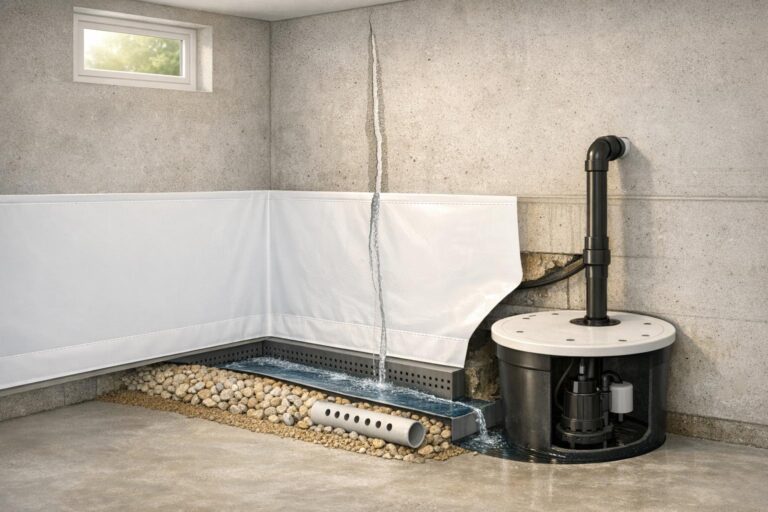
If exterior excavation isn’t an option, interior waterproofing can be a practical alternative. This approach uses drainage channels or perforated pipes along the basement’s interior perimeter to capture water before it reaches the floor. A sump pump then redirects the water away from the house. Costs for interior systems range from $70 to $120 per linear foot, and Toronto residents may qualify for the city’s Basement Flooding Protection Subsidy, which offers up to $3,400 for eligible installations like backwater valves and sump pumps.
For smaller issues, such as vertical cracks in poured concrete walls, foundation crack injections using resin or epoxy can seal the problem from the inside. This repair typically costs between $500 and $1,200 per crack, depending on how accessible the area is. If your weeping tiles are clogged or no longer functioning, replacing them can cost $120 to $275+ per linear foot. Installing a sump pump generally costs between $1,000 and $3,000, and adding a battery backup ensures it operates during power outages. These measures not only address immediate concerns but also protect your home’s structure and energy efficiency for the long term.
Moisture Control and Ventilation
Since air movement drives much of the water vapour transfer, managing airflow is just as critical as dealing with liquid water. Keep your basement’s relative humidity between 30% and 50% using a hygrometer, and use a dehumidifier if necessary to prevent mould and dust mites.
Seal gaps around the sill plate and rim joists with spray foam or gaskets to block moisture and heat loss. Make sure exhaust fans and dryer vents discharge directly outdoors, not into the basement or attic. For crawlspaces with exposed earth floors, lay down a 6‑mil polyethylene vapour barrier. Overlap the seams by 12 inches, tape them to the walls, and secure them properly to reduce moisture. Additionally, ensure your sump pit has an airtight, childproof cover to keep out moist soil air and radon gas.
Insulation and Air Sealing
While moisture control creates a stable environment, proper insulation is essential for improving energy efficiency. Basements can account for about 20% to 25% of a home’s heat loss, so upgrading insulation can lead to noticeable energy savings. However, never insulate a basement with active moisture issues – such as leaks or dampness – before addressing the underlying problems. As Natural Resources Canada advises:
“Do not insulate a basement with moisture problems from the inside (leaks, dampness, efflorescence and blistering paint). If you must, take corrective measures to eliminate the moisture before adding insulation or your new walls will rot.”
Once your basement is dry, closed-cell polyurethane spray foam is a great option for uneven surfaces, as it creates an airtight seal. For smooth, vertical concrete walls, rigid foam board offers a cost-effective alternative. Both materials resist moisture far better than fibreglass batts, which lose their insulating properties when wet and can encourage mould growth. Seal all openings – like those around gas lines, electrical conduits, and exhaust vents – with expanding foam or flexible sealants. To further protect your home, install a moisture-resistant membrane between the foundation and the sill plate to prevent water from wicking into the wood frame.
Once moisture problems are resolved, homeowners often notice an immediate improvement in overall comfort. A dry basement can be transformed into a functional living space, such as a home office, gym, or storage area, without the concerns associated with dampness, odours, or poor air quality.
How a Dry Basement Improves Daily Living
A dry basement changes how you use your home. Instead of avoiding the space, it becomes an extension of your living area. Homeowners can safely use it for storage, hobbies, exercise, or even as a workspace.
Improved lighting, reduced humidity, and cleaner air all contribute to a more comfortable environment. These changes can positively affect productivity, organization, and overall satisfaction with your home.
In addition, removing moisture issues helps eliminate persistent odours and improves indoor air circulation, making the entire house feel fresher and more balanced.
Long-Term Benefits of Fixing a Wet Basement
Taking the right steps to fix a wet basement pays off in the long run, offering financial, structural, and health-related advantages. Addressing basement moisture issues doesn’t just solve immediate problems – it sets the stage for lasting savings. For example, controlling dampness makes your home more energy-efficient, which translates to lower heating and cooling costs. As the U.S. Department of Energy explains: “Controlling moisture can make your home more energy-efficient, less costly to heat and cool, more comfortable, and prevent mold growth”. When your insulation and air sealing work properly, your home runs more efficiently, and you’ll notice smaller utility bills month after month.
Beyond energy savings, repairing basement leaking now can help you avoid costly structural repairs down the road. Water can weaken concrete, rot wooden beams and floor joists, and corrode metal supports. Tackling the issue early prevents damage that could cost tens of thousands of dollars later. It also helps preserve interior finishes, protecting your basement from water stains, mould, and odours. A dry basement, especially one professionally waterproofed, adds value to your home. It eliminates potential red flags for buyers, such as musty smells or visible mould, and often comes with transferable lifetime warranties. As City Wide Group points out: “Investing in proper waterproofing now can make your home easier to sell and help protect its market value”.
On top of financial and structural benefits, addressing basement moisture improves your home’s air quality and overall comfort. A dry basement reduces mould and dust mite growth, which can lead to fewer respiratory issues and cleaner air throughout your house. Since moisture doesn’t stay confined to the basement, fixing the problem helps lower humidity levels upstairs as well. That persistent musty smell disappears, and your home becomes easier to heat and cool, enhancing thermal comfort.
Temporary fixes like dehumidifiers or interior membranes might seem appealing, but they often lead to higher costs over time. Dehumidifiers can actually draw moisture through concrete more quickly, causing issues like efflorescence and spalling. Similarly, interior membranes may deteriorate under water pressure, allowing hidden structural damage to continue. Proper waterproofing addresses the root cause of the problem, offering long-term protection for your home’s value and comfort. By fixing the issue at its source, you’re making a smart investment that will benefit your household for decades.
Conclusion
A wet basement isn’t just an inconvenience – it can compromise your home’s structure, air quality, and overall energy efficiency. Moisture sneaks in through unsealed foundation cracks and poor drainage systems, spreading mould spores and raising humidity levels throughout your living spaces.
Addressing these issues head-on with professional waterproofing is key. Solutions like exterior waterproofing, improved drainage, and repairing foundation cracks tackle the root cause of moisture problems. This not only protects your home from structural damage but also prevents mould growth and enhances energy efficiency, creating a safer and more comfortable indoor environment.
While quick fixes might seem appealing, they often mask the problem rather than solve it, potentially leading to more expensive repairs down the road. Investing in long-term solutions now ensures your home’s value and your peace of mind remain intact. The best approach is one that eliminates moisture at its source.
For expert help with basement moisture issues, Leaquida Waterproofing offers services like interior and exterior waterproofing, sump pump installation, and drainage upgrades. Taking a proactive and thorough approach not only protects your home but also ensures lasting comfort and energy savings.

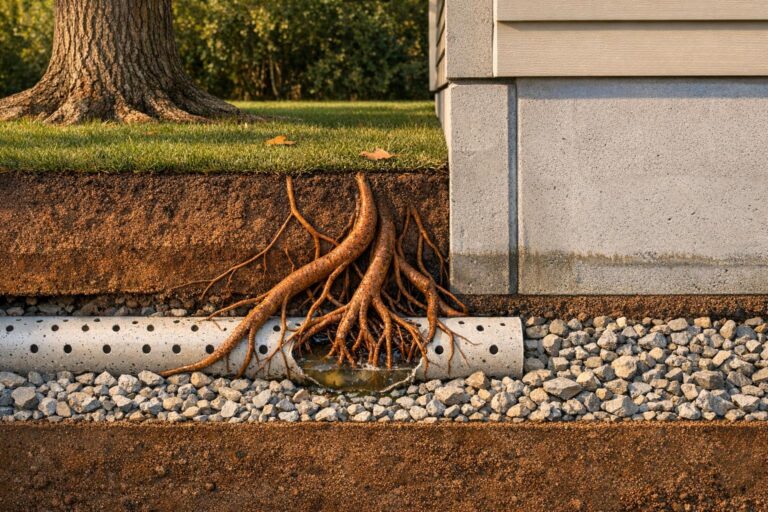
 CLOGGED OR BROKEN WEEPING TILE