
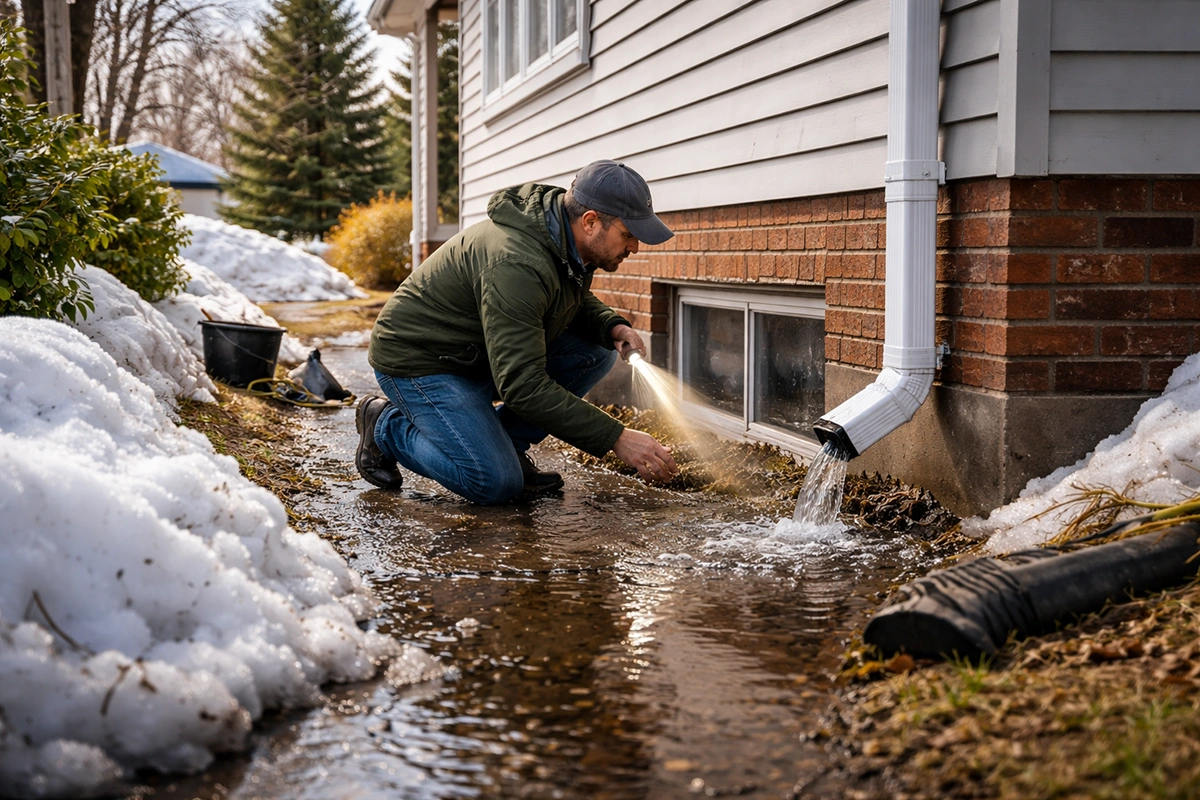
Spring arrives, snow melts, and suddenly you notice water seeping into basement after heavy snow. Sound familiar? This scenario affects thousands of Canadian homeowners every year. The good news? Most spring basement flooding can be prevented with proper maintenance.
Why Basements Leak After Snow Melt
When winter snow starts melting, the ground around your foundation absorbs massive amounts of water. If drainage systems aren’t working properly, that water finds its way into your basement.
The freeze-thaw cycle also creates cracks in foundation walls, making leaks worse.
Basement leaking after snow melt typically happens because:
- Gutters and downspouts are clogged with debris.
- Ground slope directs water toward the foundation.
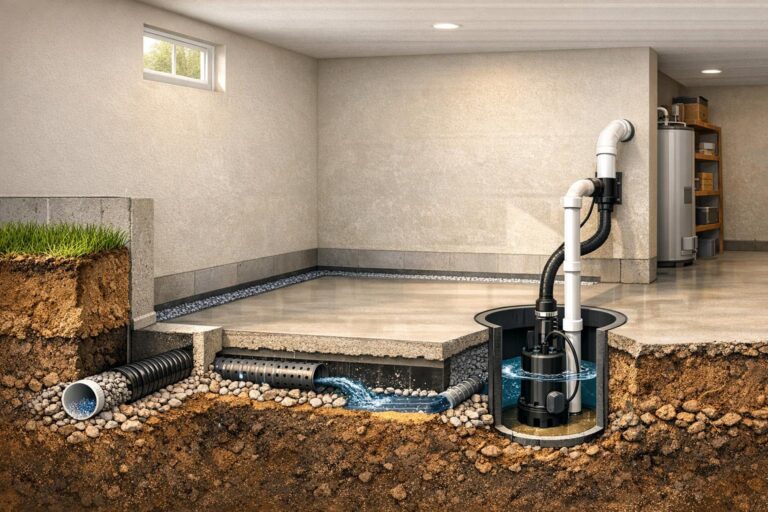
- Sump pump isn’t functioning properly.
- Foundation cracks that developed during winter
Spring Home Maintenance Checklist Canada
Follow this essential checklist to prevent spring basement flooding:
- Inspect Your Foundation
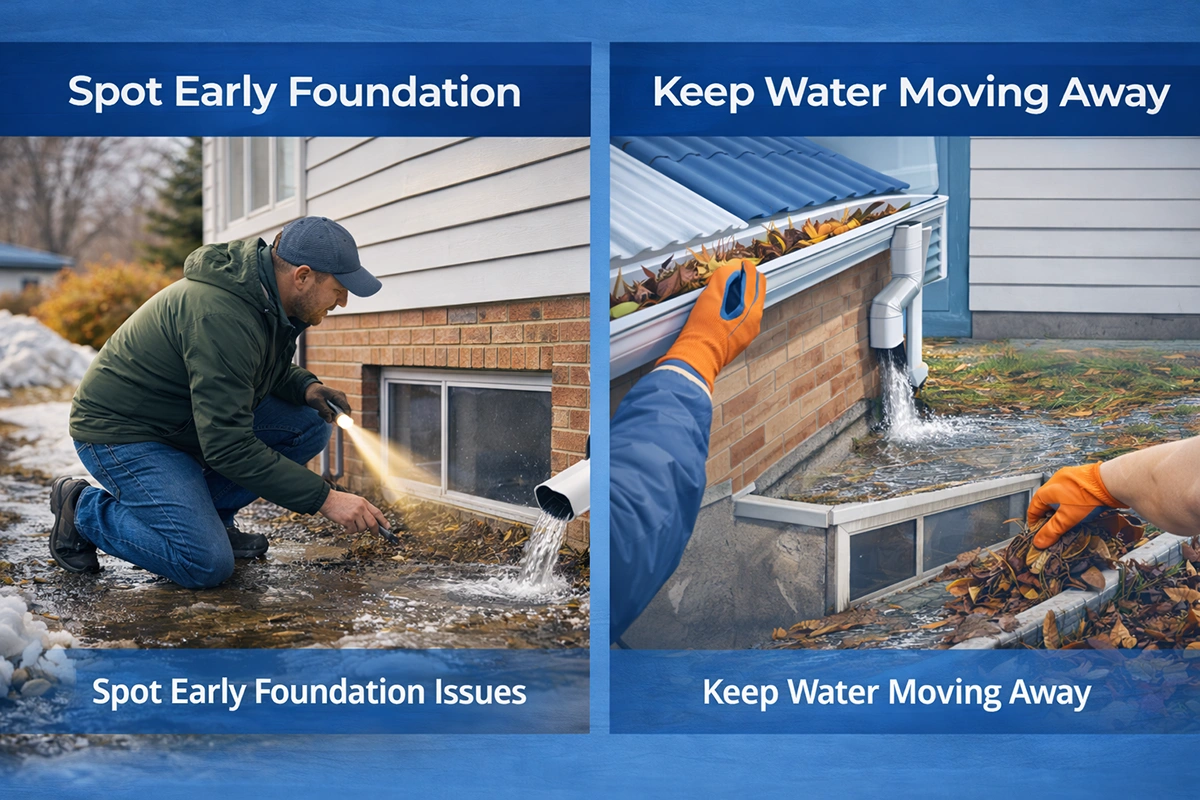
Check foundation for leaks spring by examining both interior and exterior walls. Look for:
- New cracks or widening of existing ones.
- White chalky deposits (efflorescence), a common sign of moisture penetration.
- Damp spots or water stains.
- Musty odors indicating hidden moisture.
Walk around your home’s perimeter during or right after rain. You’ll spot problem areas where water pools against the foundation.
- Clear Drainage Systems
Snow melt drainage problems often stem from blocked gutters and downspouts. Remove leaves, twigs, and ice buildup. Ensure downspouts extend at least 6 feet from your foundation.
Check window wells for debris. These often collect melting snow and create direct pathways into basements if not properly maintained.
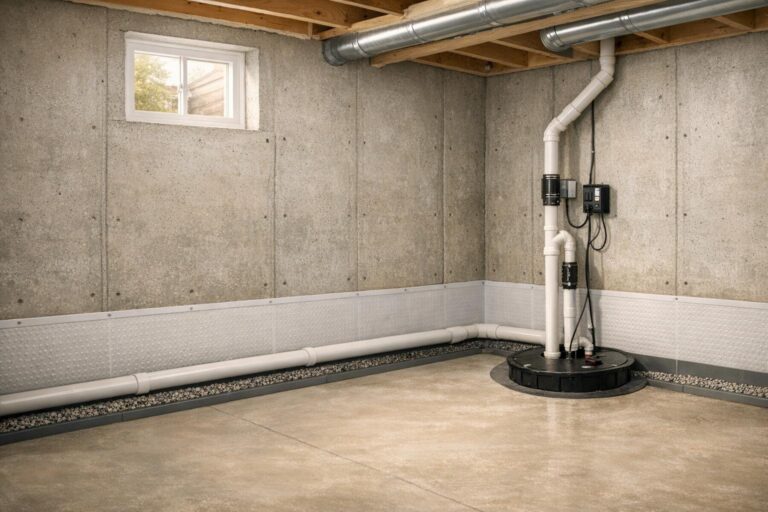
- Prepare Your Sump Pump
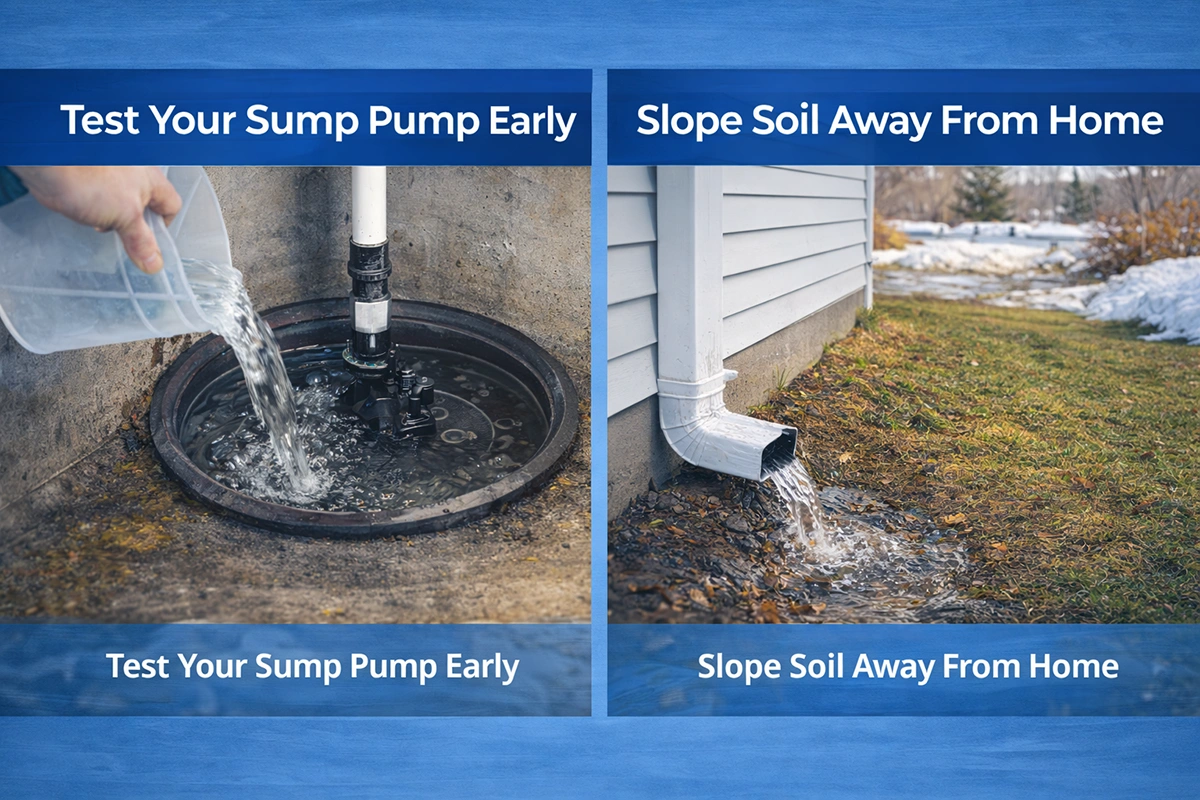
How to prepare sump pump for spring:
- Pour water into the sump pit to test the pump activates.
- Listen for unusual grinding or rattling sounds.
- Check the discharge pipe isn’t frozen or clogged.
- Verify the float switch moves freely.
- Consider installing a battery backup if you don’t have one.
Sump pump failure is a leading cause of spring flooding. Test yours before heavy rains hit.
- Grade Your Yard Properly
Soil settles over time, creating depressions near your foundation. Water should slope away from your home at least 6 inches over 10 feet. Add soil where needed to maintain proper drainage.
Spring Thaw Basement Waterproofing Tips
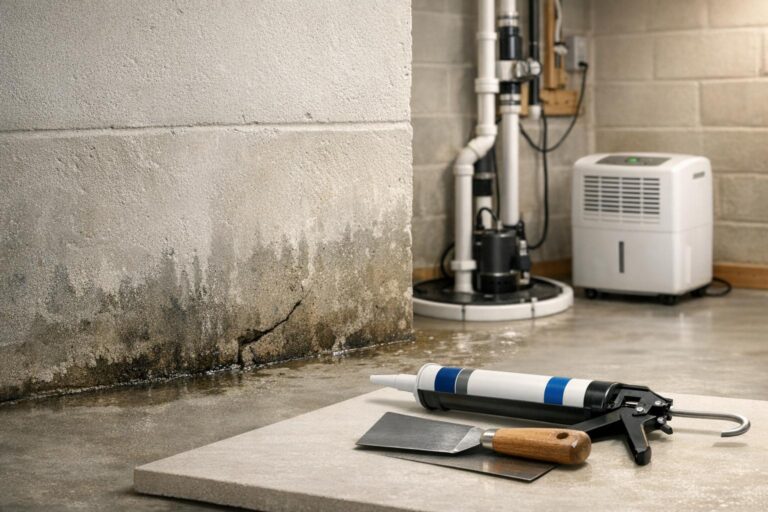
Seal Interior Cracks: Small foundation cracks (less than ¼ inch) can be sealed with hydraulic cement or epoxy injection. Larger cracks need professional assessment.
Apply Waterproof Coating: Consider applying waterproof paint or sealant to basement walls. While not a substitute for proper exterior waterproofing, it adds an extra protection layer.
Install a Dehumidifier: Even without visible leaks, spring brings humidity. A dehumidifier keeps moisture levels below 50%, preventing mold growth.
Check Basement Windows: Ensure window wells have proper drainage and wells are sealed. Replace cracked caulking around window frames.
When to Call Professionals
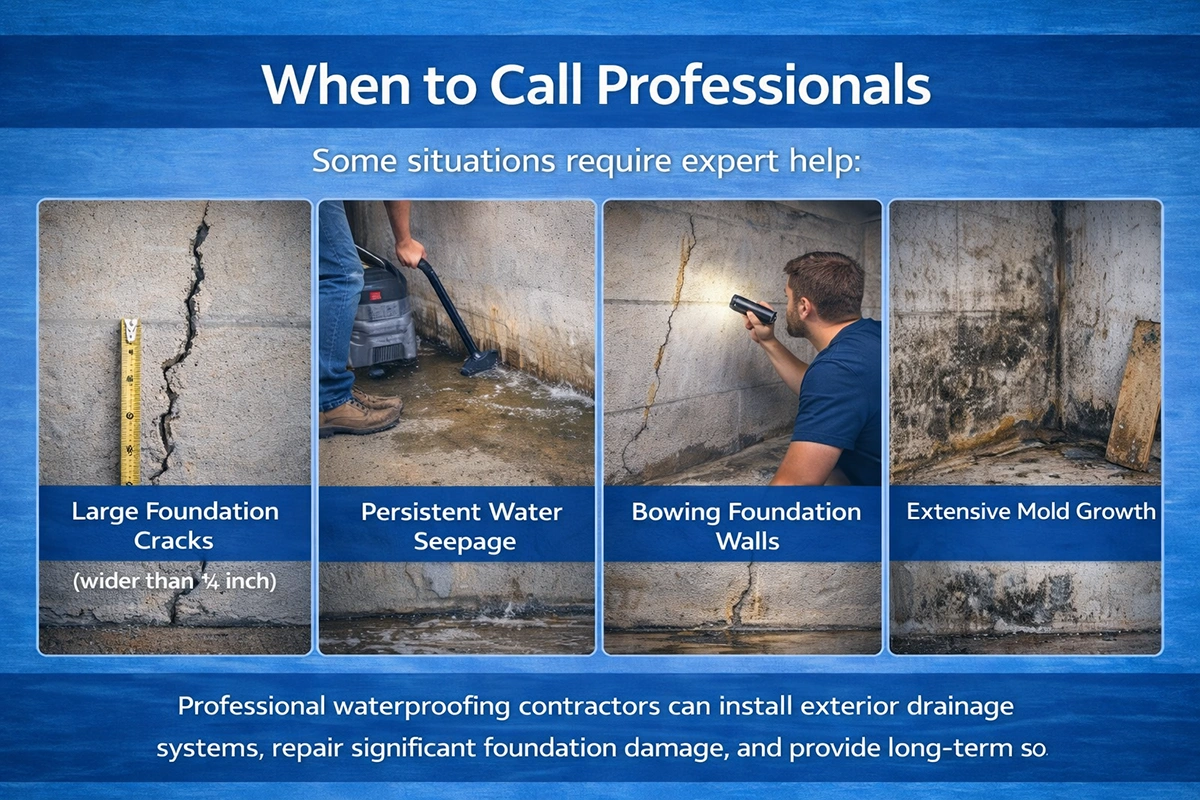
Some situations require expert help:
- Large foundation cracks (wider than ¼ inch)
- Persistent water seeping despite your efforts
- Bowing or bulging foundation walls
- Extensive mold growth
- Sump pump repeatedly failing
Professional waterproofing contractors can install exterior drainage systems, repair significant foundation damage, and provide long-term solutions.
Prevention Is Cheaper Than Repair
Water damage restoration is more expensive than preventative maintenance. The math is simple.
Spend a weekend in early spring checking these critical areas. Clear those gutters, test that sump pump, and inspect your foundation. Your basement—and your wallet—will thank you when the snow melt and spring rains arrive.
Remember: basement leaking after snow melt isn’t inevitable. With proper spring home maintenance, you can keep your basement dry all season long.

 CLOGGED OR BROKEN WEEPING TILE