
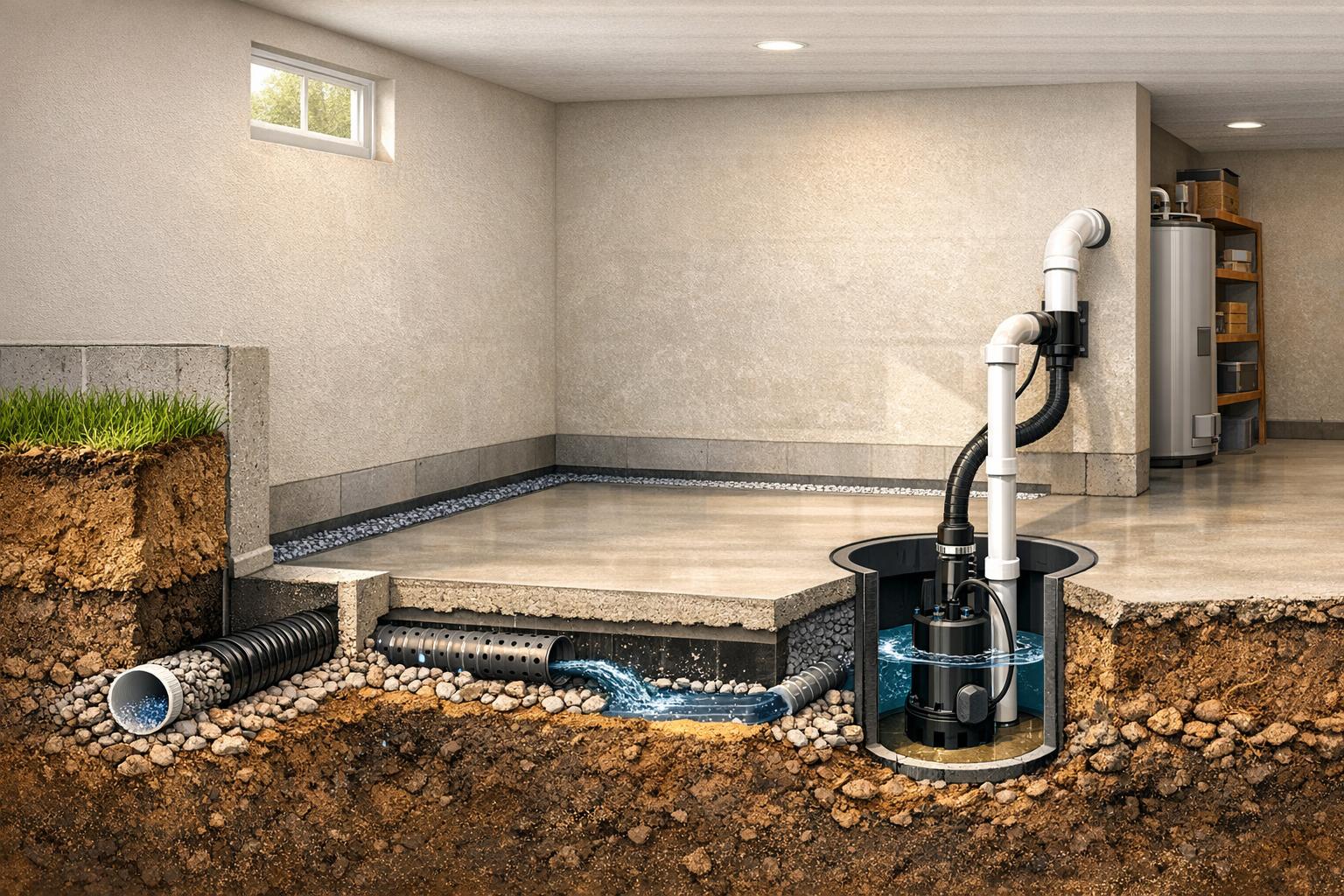
Basement water problems in Canada often stem from hydrostatic pressure, poor grading, clogged weeping tiles, or foundation cracks. These issues can lead to moisture seepage, pooling water, and structural damage. Without proper drainage, even a single inch of rainfall can deposit 600 gallons of water onto a home’s roof, saturating the soil and increasing the risk of basement flooding.
Key Takeaways:
- Interior Perimeter Drains: Manage water at the floor-wall joint, cost $40–$85/linear foot, and are installed indoors with minimal disruption.
- Exterior French Drains: Intercept water outside the foundation, cost $100–$250/linear foot, but require extensive excavation.
- Sump Pumps: Remove collected water efficiently, cost $500–$1,200 for installation, and work with both interior and exterior systems.
Quick Comparison:
| Feature | Interior Drains | Exterior Drains | Sump Pumps |
|---|---|---|---|
| Cost | $4,000–$17,000 | $8,000–$15,000 | $500–$1,200 |
| Disruption | Moderate (indoor work) | High (yard excavation) | Low (localised area) |
| Soil Suitability | Excellent for clay soils | Prone to clogging in clay soils | Works in all soil types |
| Lifespan | 20+ years with maintenance | 30–40 years with upkeep | ~10 years, requires care |
For Canadian homes, interior systems are often cost-effective and less disruptive, while exterior systems provide robust protection but at a higher price. Sump pumps complement both by efficiently removing water. Proper drainage not only prevents basement flooding but also protects your home’s value and structure.
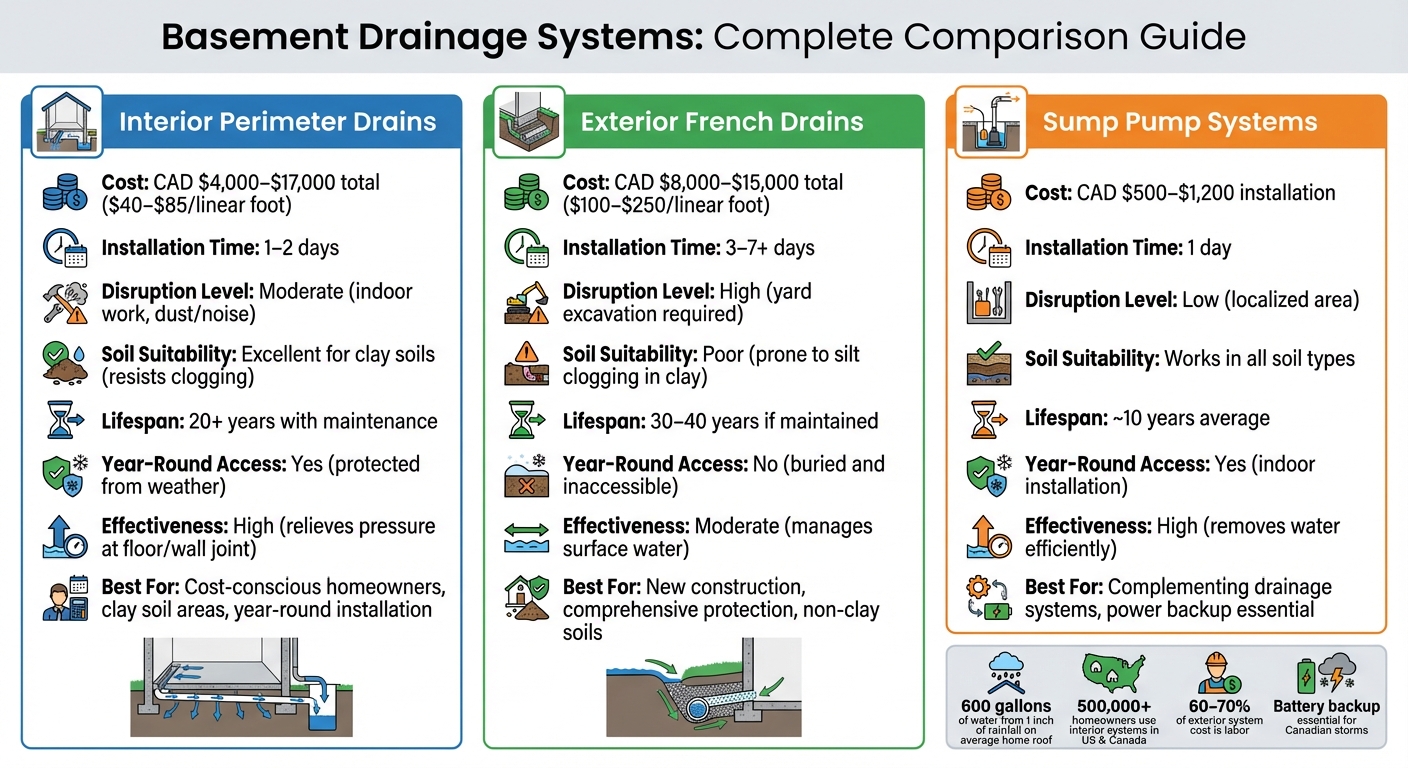
Basement Drainage Systems Comparison: Interior vs Exterior vs Sump Pumps
Basement Drainage System Types: Which is Best? | KC Pier
Interior Perimeter Drainage Systems
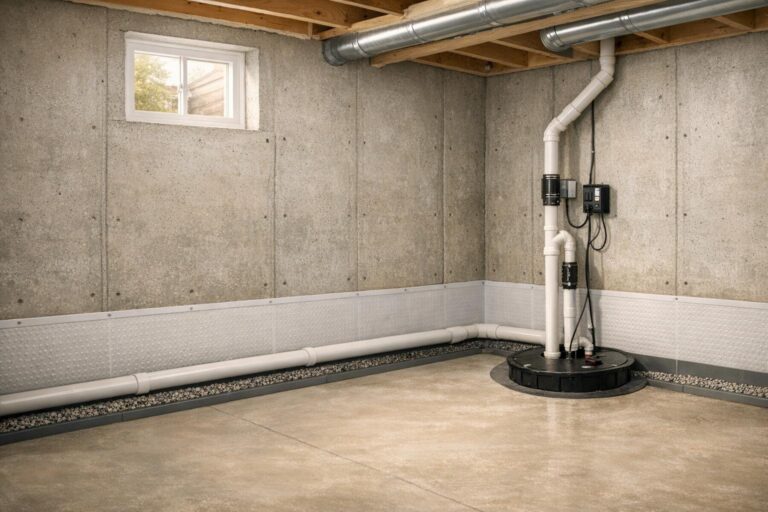
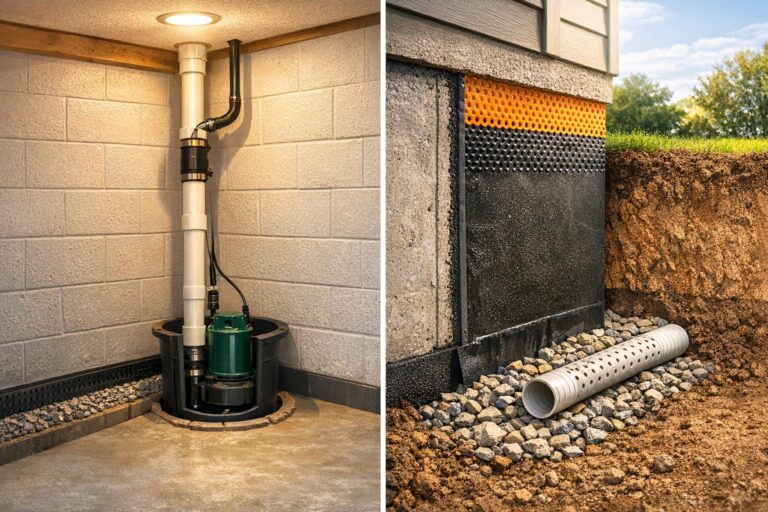
Interior perimeter drainage systems are designed to tackle water intrusion at the floor-wall joint, which is the most common spot for basement moisture to seep in. These systems use perforated pipes or drainage channels installed along the interior edge of the basement to guide water into a sump pit for removal.
Basement Systems Canada explains:
“By installing a drainage system around the inside of the basement along the wall, you can capture water at the most common point of entry – the floor/wall joint.”
Modern designs include a wall flange positioned just above the floor. This feature captures water running down the walls and helps prevent clogging by keeping debris out of the system. For homes with masonry block walls, installers often drill “weep holes” at the base of the hollow cores. These holes allow any water trapped inside the blocks to flow into the drainage system.
How Interior Perimeter Drains Work
These systems are engineered to relieve hydrostatic pressure by managing water buildup around your foundation before it can flood your basement. Typically, installing a standard system involves removing 45–60 cm (18–24 in) of concrete along the basement perimeter. However, specialized systems like WaterGuard require less excavation – only 20–30 cm (8–12 in) – because they sit above the footing. This elevated placement avoids the “mud zone”, reducing the chance of clogs caused by soil and silt over time.
The system works by collecting water from beneath the floor and along the floor-wall joint. The water is then channelled to the sump pump for removal. In block foundations, weep holes ensure that water trapped inside the walls is also directed into the drainage system.
Installing Interior Drains
A professional team can usually complete the installation of an interior drainage system in under two days. The process involves digging a trench along the basement perimeter, installing the drainage pipe on top of the footing, connecting it to a sump pit, and then sealing it all up with new concrete.
For within-slab systems, installation costs typically range from $40 to $85 per linear foot, with total project expenses (including sump pumps) falling between $4,000 and $17,000, depending on the basement’s size. It’s highly recommended to install a battery backup for the sump pump to ensure the system remains operational during power outages, which are common during Canadian storms. Additionally, homeowners should test for radon both before and after installation, as altering the foundation slab can impact how soil gases interact with the home.
When to Use Interior Systems
Interior drainage systems are particularly suited to Canadian homeowners because they can be installed in any season, regardless of frozen ground or harsh weather conditions. Since all the work is done inside the basement, there’s no disruption to landscaping, driveways, or patios. Maintenance is also easier, as technicians can access the drainage pipes through interior ports rather than having to dig up the yard.
As Carrie Hamblin of HGTV points out:
“Exterior perimeter drains are the best because they stop the water before it ever reaches your basement, but they can be very expensive and labor-intensive to install. That’s where an interior system comes in.”
Interior systems are generally more budget-friendly than exterior excavation, often costing about half as much due to reduced labour and equipment needs. More than 500,000 homeowners across the U.S. and Canada have turned to these solutions, making them a reliable choice for addressing water intrusion in existing homes.
Next, we’ll look at exterior French drains, a solution designed to manage water before it even reaches your foundation.
Exterior French Drains
Exterior French drains work hand-in-hand with interior vs. exterior basement drainage systems by tackling water issues before they even reach your home’s foundation. Often referred to as weeping tiles or footing drains, these systems are designed to intercept water and direct it away from your foundation walls. The setup involves a perforated pipe placed in a trench filled with gravel. The gravel acts as a filter, while the pipe channels water away safely. This system reduces hydrostatic pressure – the force created when water builds up against your foundation, which can push moisture through cracks or porous concrete.
How French Drains Work
Water naturally moves downward through soil until it hits a barrier or gathers around your foundation. An exterior French drain creates an easier path for water by using a sloped trench filled with drainage stone. The perforated pipe, installed at footing depth – about 2.4 to 2.7 m (8 to 9 ft) below ground – captures water through its openings and carries it away along the sloped pipe to a discharge point.
This method is particularly effective in areas like Toronto, where high water tables and heavy clay soils make natural drainage difficult. Without a proper system, water can build up against your foundation, leading to constant pressure that forces moisture through basement walls.
Installing Exterior French Drains
Installing an exterior French drain is a significant project. It involves excavating the soil around your home’s entire perimeter down to the footings. Contractors then lay a perforated pipe on a base of clean drainage stone, ensuring it slopes consistently downward toward the discharge point. The pipe is covered with more gravel before the trench is backfilled with soil.
For new builds, adding exterior drain tiles typically costs between $700 and $1,000. Retrofitting an existing home, however, is much pricier – usually ranging from $8,000 to $15,000. This is because the process often requires removing landscaping, decks, walkways, or porches. Additionally, contractors must check for buried utility lines – like gas, water, sewer, and electrical – before digging begins. The work also involves heavy machinery, which can cause major disruption to your yard.
To prevent clogs, a ground-level grate is often installed to block debris from entering the system. These details are especially important in areas with high water tables, which we’ll dive into next.
French Drains for High Water Table Areas
Exterior French drains are particularly essential in regions with heavy clay soils and high water tables. These systems stop water from pooling against your foundation – a common cause of persistent flooding and structural issues. In places like the Greater Toronto Area, the “clay bowl effect” can occur. This happens when the backfilled soil around a foundation is looser than the surrounding undisturbed clay, creating a basin that traps water against basement walls.
However, these systems face unique challenges. Being located in the “mud zone”, exterior French drains are vulnerable to clogging from silt, sediment, and tree roots. Over time, the soil near the foundation may settle, requiring re-grading. In some cases, the entire system may need replacement roughly every 10 years. If the drains clog, repairs often involve re-excavation, which is both costly and disruptive.
For homes in high water table areas, combining an exterior French drain with a high-capacity sump pump system is a smart move. This setup can handle large amounts of water during heavy rains or spring snowmelt. Additionally, applying a water-resistant membrane to the foundation walls during installation adds an extra layer of defence.
Sump Pump Integration in Drainage Systems
A sump pump acts as the heart of both interior and exterior drainage systems. Perforated pipes or French drains direct groundwater into a sump pit, a basin strategically placed at the lowest point of your basement. When the water level in the pit rises, a float switch triggers the pump to expel the water away from your foundation. This process not only collects water but also reduces the pressure groundwater exerts on your foundation.
By addressing hydrostatic pressure – the force groundwater applies against walls and floors – a sump pump setup helps protect your home. Interior drainage systems can connect to the sump pit, while exterior weeping tiles, installed at the footing level and surrounded by gravel and filter fabric, can also be linked to the pump. This is particularly useful when proper water drainage away from the house is difficult to achieve.
Types of Sump Pumps
Submersible pumps, as the name suggests, operate underwater with the motor housed inside the sump pit. This design reduces noise since the water muffles sound, and these pumps can handle small debris more effectively. However, constant exposure to water can shorten their lifespan, and repairs require removing the pump from the pit. For most homes, a 1/3-hp pump suffices, but deeper basements or flood-prone areas may need models up to 1-hp. Submersible pumps typically cost between $100 (plastic) and $200 (metal), while pedestal models, which are louder but easier to maintain, start at around $75.
A battery backup system is crucial to keep the pump running during power outages or equipment failure. Standard 1/3-hp cast-iron pumps can move about 2,500 gallons of water per hour, while 1/2-hp models can handle up to 3,900 gallons per hour. In cities like Winnipeg, homes built since 1990 are required to include sump pits with pumps.
Once installed, sump pumps integrate seamlessly with both interior and exterior drainage systems.
Connecting Sump Pumps to Drainage Systems
Interior perimeter drains and exterior French drains use gravity to channel water into the sump pit. Standard discharge pipes are usually 1.5 inches in diameter, but high-capacity pumps might need 2-inch pipes. A check valve on the discharge line is essential to prevent water from flowing back into the system.
For block foundation walls, installers often drill “weep holes” in the bottom row of blocks to drain trapped water into the interior system, directing it toward the sump pump. To stabilise the pump and reduce silt intake, the sump pit should have a 5 to 8 cm (2 to 3 inch) bed of clean gravel at the bottom. An air-sealed cover is recommended to minimise basement humidity and block radon or other soil gases from entering.
Discharging sump pump water into municipal sanitary sewers or floor drains is typically prohibited, as it can overwhelm these systems during heavy rainfall. Instead, ensure the discharge line diverts water to a safe location away from your foundation. Professional installation costs range from $500 to $1,200, while comprehensive below-slab drainage systems with pumps can cost anywhere from $4,000 to $17,000, depending on the size of the basement.
Sump Pump Maintenance
Regular maintenance is key to keeping your sump pump and drainage system in top condition. Test the pump every spring before the rainy season by pouring water into the pit until the float switch activates. The pump should start within 10–15 seconds and discharge the water efficiently. Clean the sump pit annually after the ground thaws to remove debris brought in by weeping tiles. With proper care, a sump pump can last around 10 years.
Replace the check valve annually and flush the system every one to two years to clear out sediment. For battery backup systems, replace the batteries every one to three years and check them periodically rather than once a year. Inspect pipe connections regularly for dampness, corrosion, or leaks, and reseal them as needed.
In winter, specialised fittings like “IceGuard” can prevent discharge lines from freezing or clogging. Always plug your sump pump into a Ground Fault Circuit Interrupter (GFCI) outlet to reduce the risk of electrocution. If your pump runs continuously or fails during testing, consult a professional to address potential electrical issues or system upgrades.
sbb-itb-5761e20
Drainage System Comparison
Deciding between interior perimeter drains, exterior French drains, and sump pump systems comes down to factors like budget, property layout, and soil conditions. For many Toronto homeowners, interior systems are the more budget-friendly option, costing about half as much as exterior systems. The steep price of exterior systems is largely due to the extensive excavation involved – landscaping, driveways, and patios often need to be removed, with labour making up 60% to 70% of the total cost.
Disruption levels also vary significantly. Interior perimeter drains are typically installed within 1–2 days and cause moderate dust and noise inside the basement. In contrast, exterior French drains take much longer – 3–7+ days – because of the heavy yard excavation required. Sump pump installations are the least intrusive, as they focus on a single area and can be completed in just one day.
Soil conditions are another critical factor. The clay soil prevalent in the Greater Toronto Area is notoriously hard to excavate, which drives up labour costs for exterior systems. Additionally, exterior drains in clay soil often clog with silt and sediment from the “mud zone”. Interior systems avoid this issue by being installed above the footing in a “clear water zone”, making them a better fit for Ontario’s challenging soil conditions.
Serviceability is where interior systems shine. They can be easily inspected through access ports, unlike exterior drains, which require costly yard excavation for maintenance. This is especially important in Toronto’s climate, where freezing temperatures and shifting soil can complicate exterior systems. Interior systems remain accessible and protected year-round. Exterior French drains, on the other hand, often need re-grading after about 10 years due to soil settling.
Below is a quick comparison of the three systems to help you weigh your options.
Drainage Systems Comparison Table
| Feature | Interior Perimeter Drains | Exterior French Drains | Sump Pump Systems |
|---|---|---|---|
| Installation Cost | About half of exterior systems | Higher due to excavation | Varies by capacity and features |
| Disruption Level | Moderate (dust/noise indoors) | High (yard excavation required) | Low (localised to one area) |
| Installation Time | 1–2 days | 3–7+ days | 1 day |
| Effectiveness Against Hydrostatic Pressure | High (relieves pressure at floor/wall joint) | Moderate (manages surface water) | High (removes water efficiently) |
| Suitability for Clay Soils | Excellent (resists clogging) | Poor (prone to silt clogging) | Works in all soil types |
| Lifespan | 20+ years with maintenance | 30–40 years if maintained | 10 years average |
| Year-Round Access | Yes (protected from weather) | No (buried and inaccessible) | Yes (indoor installation) |
This comparison highlights the strengths and limitations of each system, laying the groundwork for understanding Leaquida Waterproofing’s tailored solutions.
Leaquida Waterproofing Drainage Solutions

When it comes to keeping your basement dry, Leaquida Waterproofing offers drainage solutions tailored specifically for Canadian homes. Their systems are designed to tackle water issues from both inside and outside the foundation, ensuring long-term protection against moisture.
Interior and Exterior Drainage Systems
Leaquida Waterproofing provides a range of drainage options to suit the unique needs of Canadian basements. For interior solutions, they feature the WaterGuard® System, a patented sub-floor piping system. This system is positioned on top of the foundation footing, just above the “mud zone”, to prevent clogs caused by soil and sediment build-up. The installation process is minimally invasive, requiring the removal of just 20–30 centimetres of concrete.
For homes with monolithic floors, Leaquida offers the DryTrak® Baseboard System and TrenchDrain, which are designed to capture water at key entry points. They also provide specialized drainage systems for unique challenges, such as iron bacteria in the soil (Iron Ochre systems) or thin basement floors.
On the exterior, Leaquida installs French drains (also known as footing drains). These are perforated PVC pipes placed in gravel-filled trenches around the foundation to divert groundwater away from the home. For more extensive protection, they offer exterior excavation services. This involves digging around the foundation, applying waterproof membranes to the exterior walls, and replacing any old, failing drains. Interior installations are typically completed in less than two days.
These systems are designed to work seamlessly with their advanced sump pump options, which we’ll cover next.
Sump Pump and French Drain Installation
To complement their drainage systems, Leaquida connects them to high-capacity sump pumps like the TripleSafe or SuperSump, ensuring efficient water removal. The TripleSafe system is particularly robust, featuring a primary pump, a secondary pump, and a battery backup that keeps it running even during power outages – an important feature during Ontario’s intense storms.
For Canadian winters, where freezing discharge lines can be a problem, Leaquida includes IceGuard technology. This prevents blockages caused by ice and ensures proper drainage during rapid snowmelt or heavy rain, common in the Toronto area. Additionally, their systems include access ports at intervals along the drain lines, allowing for easy maintenance and inspection without disturbing the floor slab.
Pricing and Warranty
Leaquida’s drainage systems are priced based on the type of installation. Interior systems range from CAD $70 to $120 per linear foot, while exterior systems cost between CAD $100 and $250 per linear foot. Repairs for foundation cracks typically range from CAD $500 to $1,200 per crack.
Every installation comes with a lifetime limited warranty, which is provided in writing and can be transferred to future homeowners. Before starting any work, Leaquida offers free, no-obligation inspections and detailed estimates. This ensures homeowners have a clear understanding of the scope and cost of the project. Their approach avoids generic solutions by considering factors like the type of foundation (block or poured concrete) and local soil conditions.
Selecting the Right Drainage System
Choosing the right drainage system starts with understanding your foundation type. This is crucial because it determines whether interior or exterior options are better suited for your home. For instance, traditional foundations with separate footings and slabs can support within-slab or below-slab drains. On the other hand, monolithic foundations – where the slab and footing are poured as a single piece – require on-slab or baseboard systems. Your foundation type not only impacts the installation method but also influences the overall cost.
Speaking of costs, budget is another major factor. Interior drainage systems typically range from CAD $70 to $120 per linear foot, while exterior systems are more expensive, running between CAD $100 and $250 per linear foot. These figures align with the technical comparisons discussed earlier.
Before diving into any drainage system installation, it’s essential to address basic exterior maintenance. Start by clearing gutters and ensuring downspouts direct water at least 1.8 metres away from your foundation. These simple steps can help manage surface water issues. However, for more severe problems like hydrostatic pressure or rising water tables, you’ll likely need perimeter drains combined with a sump pump.
Once you’ve handled the basics, it’s time to bring in an expert. A structural engineer’s inspection is a smart next step, costing around CAD $550. This assessment helps pinpoint the root cause of your water issues and ensures you’re investing in the right solution. If your project involves slab penetration, don’t forget to test for radon both before and after the work. Excavation can change how soil gases, like radon, enter your home.
In regions with harsh Canadian weather, it’s also wise to prepare for power outages. Equip your sump pump with a backup system – either battery-operated or water-pressure–based – to ensure it keeps running during storms when power failures are common. Most homes can rely on a 1/3-hp sump pump, but if your property is in a floodplain or has a deep basement, you may need a 3/4-hp or larger unit. These additional measures can provide peace of mind and better protection for your home.
FAQs
How do I choose between an interior and exterior drainage system for my basement?
When choosing between an interior and exterior drainage system, the decision largely depends on where the water is coming from. If water seeps in through the floor-wall joint or rises from beneath the slab, an interior system with a perimeter drain and sump pump is often the better option. On the other hand, if surface runoff, poor grading, or high groundwater levels are pushing water against your foundation walls, an exterior French drain or footing drain can catch the water before it makes its way into your basement.
You’ll also want to weigh cost, disruption, and maintenance. Interior systems are generally more affordable and quicker to install since they don’t require digging around your home. However, they do involve cutting into the basement floor. Exterior systems, while more expensive due to excavation and potential landscaping impacts, tackle water issues before they reach your home. Maintenance is another factor – interior systems are easier to access for repairs, while exterior systems might require re-excavation if they become clogged.
Don’t forget to consider local conditions, especially in regions across Canada where frost depth can be a concern. Exterior drains need to be installed below the frost line to avoid freezing and damage. Meanwhile, interior systems depend on a sump pump, which can be insulated or heated to ensure it functions properly during colder months. By evaluating the water source, your budget, maintenance needs, and site-specific factors, you can choose the drainage system that works best for your basement.
How does a sump pump work with interior and exterior drainage systems to keep basements dry?
A sump pump sits in a pit – known as a “sump” – at the lowest point of a basement or crawl space. Its job? To kick into action when water in the pit reaches a certain level. The pump then pushes the water out through a discharge line to a safe spot, like a storm drain or an area away from your home’s foundation.
In an interior drainage system, perforated pipes installed beneath the basement floor collect water from cracks or where the floor meets the walls. This water is funnelled into the sump pit, keeping it from pooling inside your basement. On the other hand, an exterior drainage system, such as a French drain, works outside the home. It gathers groundwater near the foundation and directs it to the sump pit, stopping water before it even gets inside.
Together, these systems work to collect and remove water efficiently, keeping your basement dry and helping prevent moisture-related damage.
What maintenance steps are needed to keep a basement drainage system working effectively?
To keep your basement drainage system working efficiently, it’s important to stay on top of maintenance – aim for at least twice a year, ideally in the spring after the snow melts and again in the fall before the freeze sets in. Start by checking for signs of wear and tear, such as corrosion, cracks, or water stains around the sump pit, pipe connections, or discharge points. If you spot small issues like leaks, take care of them right away to avoid bigger headaches down the road.
Next, clear out any debris, leaves, or sediment from interior drains, French drain trenches, or exterior weeping tiles. A garden hose can be handy for flushing water through clean-out ports to confirm everything is flowing properly. Don’t forget to test the mechanical parts of your system – run the sump pump to make sure it’s working, and check that backwater valves are functioning as they should. Also, inspect the pump’s float switch to ensure it moves freely without any blockages.
Finally, check the grading around your home’s foundation. The ground should slope away from the house at a rate of at least 2% (about 2 cm per metre). Following these simple steps can help extend the lifespan of your drainage system and keep your home safe from water damage.
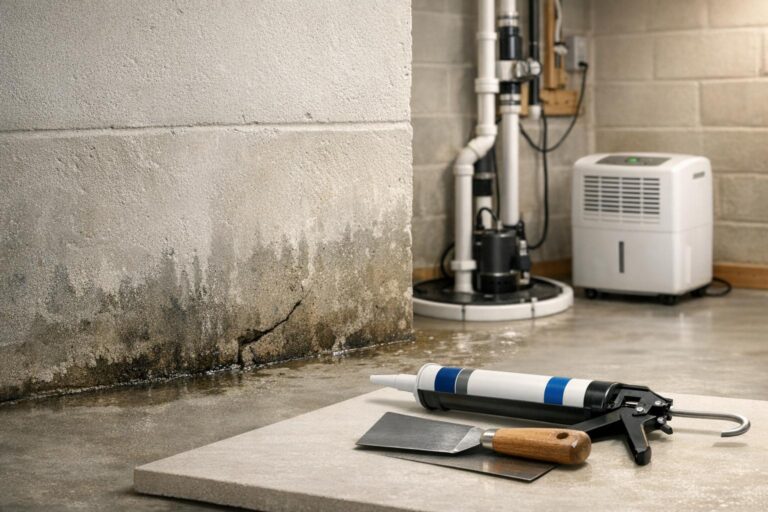
 CLOGGED OR BROKEN WEEPING TILE