
Many homeowners fall for common myths that lead to poor decisions and wasted money. To help you avoid costly mistakes, let’s debunk some of the most widespread waterproofing myths.
Myth #1: Waterproofing is Only Necessary for Older Homes
It’s easy to assume that only older homes need waterproofing. But even new constructions are vulnerable to water damage. Poor drainage, faulty construction, or simply heavy rainfall can affect any building. Waterproofing should be considered preventative, not reactive.
Whether it’s a new build or an older property, waterproofing for house structures should be viewed as a standard part of home maintenance. Waterproofing houses early helps prevent moisture intrusion, protects the foundation, and extends the lifespan of the entire building.
Myth #2: A Coat of Paint is Enough to Waterproof Walls
While some paints claim to be waterproof, they don’t provide lasting protection against serious leaks or seepage. These coatings may temporarily block surface moisture but won’t seal cracks or handle hydrostatic pressure from groundwater. Proper waterproofing includes membranes, sealants, and often professional-grade systems.
Myth #3: Basement Leaks Are Just a Minor Problem
A small basement leak can be a symptom of a larger issue. Water infiltration can lead to mold growth, structural weakening, and damage to electrical systems. Ignoring it can result in major repair bills down the line. Early intervention is key.
Myth #4: DIY Waterproofing Works Just as Well as Professional Service
Some minor waterproofing tasks can be done yourself, like sealing small cracks. However, professional waterproofing involves thorough inspections, advanced tools, and years of expertise. DIY solutions often mask the symptoms without addressing the cause.
Myth #5: Interior Waterproofing Is Enough
Many people focus only on interior solutions like sump pumps or interior sealants. While helpful, these don’t prevent water from entering your home in the first place. Exterior waterproofing, including drainage systems and foundation sealing, is essential for long-term protection.
Myth #6: Waterproofing Is Too Expensive
While professional waterproofing may seem costly, it’s far cheaper than the cost of repairing water damage. Mold remediation, foundation repair, and lost personal property can add up quickly. In reality, waterproofing for home protection often costs significantly less than repairing structural damage, mold remediation, or replacing finished basement spaces. Many homeowners only realize this after ignoring early warning signs.
Myth #7: Waterproofing Is a One-Time Job
Unfortunately, waterproofing isn’t always a set-it-and-forget-it fix. Materials can degrade, and new problems can arise due to shifting foundations, extreme weather, or aging infrastructure. Regular inspections help maintain your home’s defense against moisture.
Myth #8: Cracks Mean Total Foundation Failure
Cracks in your foundation don’t always mean disaster, but they do signal it’s time for a professional assessment. Small cracks can often be sealed easily, but if ignored, they can widen and let water in. Catching issues early can save you from extensive repairs later.
Myth #9: Only Homes in Flood Zones Need Waterproofing
Even if you’re not in a flood-prone area, heavy rain, poor drainage, or plumbing leaks can still cause serious water issues. Waterproofing is crucial for homes in all climates, not just those near rivers or coastlines.
Myth #10: Gutters and Downspouts Don’t Impact Waterproofing
Clogged or improperly placed gutters and downspouts can cause water to pool near your foundation, increasing the risk of leaks. A well-maintained gutter system is a simple but powerful tool in your waterproofing strategy.
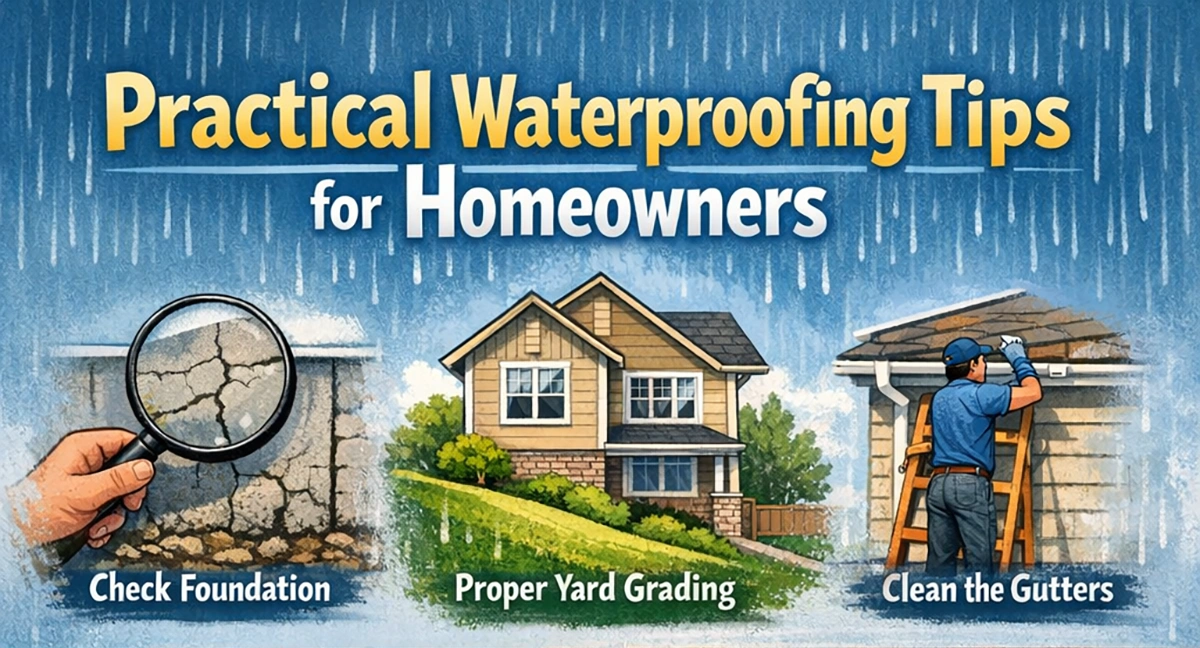
Practical Waterproofing Tips for Homeowners
Understanding common waterproofing myths is only half the solution. Homeowners also need practical waterproofing tips that help prevent water damage before it starts. Regular foundation inspections, proper grading around the house, and keeping gutters clear are simple but effective steps that support long-term waterproofing for home protection.
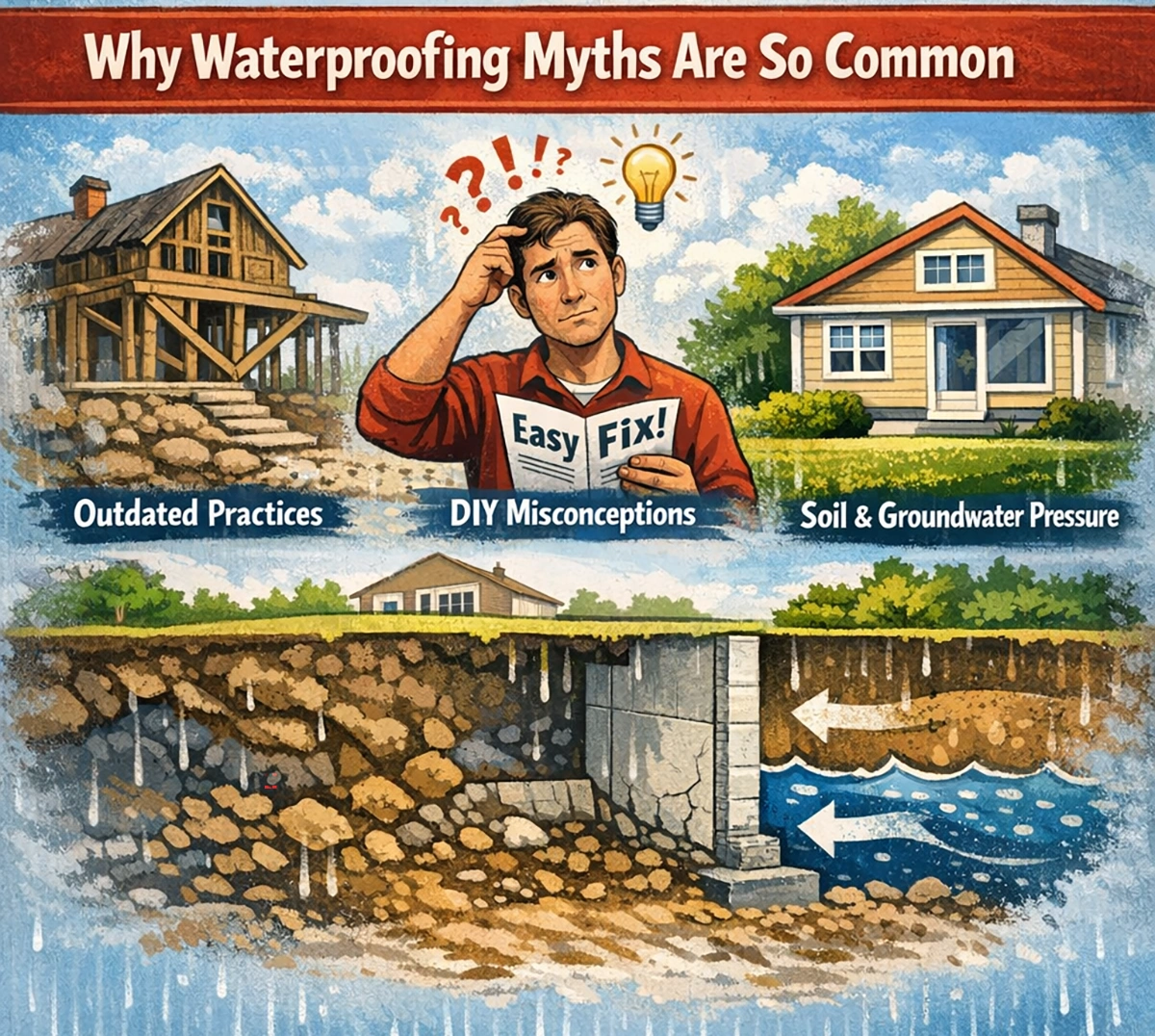
Why Waterproofing Myths Are So Common
Many waterproofing myths come from outdated construction practices, oversimplified DIY advice, or marketing claims that ignore real-world conditions like soil movement and groundwater pressure. Understanding these factors helps homeowners make smarter decisions about waterproofing for house and basement protection.
Conclusion: Don’t Let Myths Cost You
Believing in waterproofing myths can put your home at risk. Effective waterproofing combines both interior and exterior systems, regular maintenance, and often professional support. Don’t wait until damage occurs—take steps now to protect your home for the long haul.
FAQ
Yes. Even newly built homes can experience water intrusion due to soil settlement, improper grading, rushed construction practices, or inadequate drainage systems. Waterproofing for house structures at an early stage helps prevent hidden moisture problems and protects the foundation before damage occurs.
No. Waterproof paint may reduce surface moisture temporarily, but it cannot stop water entering through foundation cracks, joints, or areas affected by hydrostatic pressure. Effective waterproofing for home protection requires proper sealing systems, membranes, and drainage solutions that address the source of the problem.
Yes. Small leaks are often early warning signs of deeper foundation or drainage issues. Addressing them early with professional waterproofing helps prevent mold growth, structural deterioration, and costly repairs in the future.
In most cases, no. DIY solutions may temporarily hide visible symptoms, but they rarely fix the root cause of water intrusion. Professional waterproofing includes detailed inspections, correct system selection, and long-term solutions designed specifically for your home’s conditions.
Not always. Interior systems like sump pumps and interior sealants help manage water after it enters the basement. Exterior waterproofing, however, prevents moisture from reaching the foundation in the first place. A combination of both approaches provides the most reliable waterproofing for home and basement protection.
Waterproofing systems require periodic inspection and maintenance. Changes in soil conditions, foundation movement, and weather extremes can affect performance over time. Regular checkups help ensure waterproofing houses remain protected for the long term.
Yes. Water damage can affect homes in any area due to heavy rainfall, poor lot drainage, foundation cracks, or plumbing issues. Waterproofing for house foundations is important regardless of location, not just in flood-prone regions.


 CLOGGED OR BROKEN WEEPING TILE